A Looney Tunes United States
Bill Bonner
 Not much time to write this morning... or is it evening? Not much time to write this morning... or is it evening?
We don't know. But yesterday, we promised the crowd, here at the Investment Symposium, that we would have some answers by Friday. Today, we listened to other speakers... hoping something would come up.
What does it all mean? How come oil is backing off? Why are banking stocks going up? How can the United States get out of its debt trap?
And the 'civil war' between inflation and deflation? How will it end? With a bang of hyper-inflation? Or a whimper of falling prices, bankruptcies and recession?
The best we've been able to come up with so far is that - like any civil war - the civilians are getting killed. They're ambushed by higher consumer prices one day...and bushwhacked by falling asset prices the next. Living standards are falling back down to levels not seen in 40 years.
Many times, we've remarked that wages in the United States have not gone up in a very long time. The latest figures on the subject show no real increase since 1968. Since then, every penny of hourly pay increase has been matched by a cent of consumer price inflation.
Only the rich made out well, we were told. They owned assets. And asset prices have soared. But if you quote stock prices...or housing prices...in terms of the number of gallons of gasoline they will buy, you find that even "the rich" aren't as rich as they think they are. The Dow would get you about 2,200 gallons of gas in 1968. Today, at $4.10 a gallon, the Dow is equal to about 2,200 gallons.
Of course, in real terms, the Dow came down after '68. It will probably do the same now.
"Well, you don't seem to be very depressed about it," said a local reporter, doing an interview. "In fact, you seem to be in a good mood."
"Why should I be in a bad mood?" we replied. "Most people are no better off than they were when I was 19 years old. Clearly, something isn't working right. If people are going to get richer, they're going to have to do things differently - such as stop trying to spend their way to wealth. A consumer economy doesn't work. It never worked. Kurt Richebacher was right about it all along, RIP. The only way to reliably become wealthier is the old fashioned way - you have to spend less than you earn. I know this may come as a shock to your viewers, but it's true. I urge them to try it: spend less than you earn. Then, you'll have more money. It's like magic...or something...
"Besides, I'm in a good mood because everything is happening as it should. When people spend too much money...when speculators gamble too recklessly...when the government gives out to much cash and credit - there have to be consequences. A free market is not a system designed to give people a free lunch. It's designed to make them better people - by rewarding them when they do the right thing and punishing them when they do the wrong thing. For the last 20 years - at least - people have been doing things that the old economists would have regarded as 'moral failings.' That is, they've been spending more than they make...for example. Now, they've being punished. They're being re-educated. And they're going to end up poorer...but wiser.
"Frankly, we'd rather be dumber and richer, but the markets don't give you that choice. They separate fools from their money. That's what they're doing now. So, what's to be unhappy about?"
Pity the poor fellow with the big suburban house...far from civilized life...and a big mortgage, and a big, gas-gourmand vehicle to get him around. He's got to learn. He's got to downsize...to cutback...to spend less money.
But even this fellow will be better off for it. He'll be able to save some money...build some wealth...achieve great independence - rather than being a slave to his SUV, his house, his mortgage company, and his highway.
It is a miserable way to live. He's living in a "cartoon," said James Kunstler in his speech on Wednesday morning. Then showing a photo "It's a house with no windows on one side. That's not a real house; it's a cartoon house. And look at the porch. It's 17 inches wide."
He might have pointed to the shutters too. The typical suburban house has no real shutters. It has cartoon shutters, made of plastic and bolted to the wall. You can't use them to keep out the sun or the cold. They're just there so the owner can pretend he has a house with shutters.
Mr. Kunstler is a critic of the suburbs. You get the impression that he's happy to see $4 gasoline - it means the "project of suburbia is over," he says. "One and a half to three trillion dollars worth of capital - lost," he continues, referring to the money spent building out suburbs that, at $4 gasoline, serve no useful function. But good riddance.
And so you see, dear reader, we're all going to be better off. When this cartoon period is behind us - with its phony houses, its phony profits, its phony progress, and its phony GDP growth - people can begin saving again...and maybe their wages will even begin to go up again.
*** "But wait," asked our interviewer, "if the average consumer cuts back, won't that make the situation worse?"
"Of course it will seem to," was our retort. "When the going was good, he spent money he didn't have on things he didn't need. Now, the tables have been turned against him. Now he won't spend even the money that he has; he'll use it to pay down his debt and increase his savings. If savings rates just go back to where they were in the early '90s, it will take more than $300 billion out of the consumer economy. It will seem like a deep, long recession...but people will actually be better off as a result."
*** Tuesday night we finally saw I.O.U.S.A. for the first time. We have a small cameo role in the documentary, nothing that is likely to get us an Oscar, though.
The hero of the show is David Walker, former chief of the Government Accounting Office. Poor David is traveling around the country trying to awaken the citizenry to the threat posed by excessive government debt. He travels to town meetings and state legislatures to spread the alarm. Unfortunately, few people have any idea what he is talking about.
And here's a letter sent me by a very Dear Reader, who we met Tuesday night:
"About 5 years ago, I was visiting my sister who had moved to New Zealand, the neighbor came over telling tales of the Solomon Islands and a gold mine he had there. Joe, the hard working, slow talking, dreamer said, 'Honiara, it's a terrible place, you'd never want to go there.' This was 2003 and at the time the Solomons was embroiled in a civil war. Now, I am a single American woman, and I instantly thought, 'that's just where I'm going', to this day I have no earthly idea what got into me. I did a little research and emailed Doug Casey when I read an article he wrote about Vanuatu. I asked him about the Solomon Islands and in his response he said the Solomons was, 'totally corrupt'. After five years in the Solomons I'm pretty certain that he could have used stronger words!
"I arrived in Honiara, the capital, at the end of 2003, just a few months after the Australians had arrived to restore law and order, well, I should amend that to say law, there still is no order. I had two little suitcases and high hopes that were almost instantly dashed. The neighbor, Joe, as it turned out, did not have a gold mine and the place was anything but hospitable. I spent 8 long weeks in the worst hotel I've ever stayed in. Determined to stay, I bought a piece of land overlooking the sea with an old, run down colonial house on it. I looked around for some way to make money and thought, there's plenty of gold here, bet I could buy it and melt it and send it to Australia. I did not know that so many people ahead of me had tried it and failed or the first thing about gold. Ok, I knew it was supposed to be yellow, but I quickly learned there are lots of things that are yellow that are not gold! As I got into the process I began to understand many of the phrases I'd heard all my life but never actually 'got' such as, 'passing the acid test.' Oh, I thought, when I poured that first nitric acid over what was supposed to be gold but was in fact, brass. It turned green and boiled up like a witches' caldron, there were about 10 potential gold sellers in the room and we all headed for the doors and the windows to avoid the awful smell. I looked over at the slight and crusty little village man who had been pedaling this 'gold.' And I said, 'that's not gold!' and he replied, 'acid lie.' I built a place to buy the gold and installed a bathroom for my employees and the gold sellers. When the wild haired men from the gold area made a horrid mess on the floor of the bathroom I was outraged. Then I discovered that most of them had never even seen a toilet much less used one. Ever made a diagram on how to use a toilet? Well, I have. Worked pretty well, too.
"After collecting a couple of kilos of alluvial gold I tried to melt it. I got an old furnace off an Australian con man and hooked it up to the gas. No one told me you have to use a special regulator to get it hot enough. I stupidly poured all of the flux (borax and soda ash) in with the gold before I discovered I couldn't get it to quite melt, I got the heat to about 650 degrees and produced what looked exactly like a meteorite. I paid the duty on the whole thing and took it to a small refinery outside of Brisbane. It was a humiliating experience. They looked at me with such distain and were quite happy to melt my meteor and give me an assay report that was far below what it should have been. They were quite right in their assessment that I wouldn't know the difference; I was as dumb as a fence post.
"It didn't take too many trips for me to try another refinery as a reference point, what a shock, the guys at the first refinery took me to the cleaners! Next, there were the financially astute Chinese who did not like it one little bit that some blond American woman was buying up the gold that they had been buying and smuggling out! They paid immigration to stop me at the airport on my next trip back into the Solomons from carrying the gold, which is still the only way to get it out, I have to carry it myself. I can report that there was quite a little scene at the airport, I wanted to take the heavy mould I'd purchased to pour the gold into that I had in my purse because it would have made my baggage over the weight limit, and bang the immigration officer over the head with it! He rudely threatened me with Rove prison or getting back on the plane and I threatened him with death. In the end, I just paid a little more than the Chinese. We're good friends, now, me and the immigrating man, he always makes sure I get treated fairly when I enter or exit the country. Probably because he knows I could be carrying a lethal weapon in my purse!
"Then there were the Australian Federal police, well, to be fair, just the guy that was in charge at the time, he was convinced that I had drug money, or was a pirate, or a renegade, or at the very least someone who was on the lamb from the law in America. That took a bit of work to straighten out, I'll save you the gory details, too tedious. I actually had to turn the old house I bought with the splendid view into the best little restaurant in the town. The Australians loved it, even though I flat out refused to put a fried egg, beets and pineapple on their cheeseburger! The restaurant gave me enough credibility to keep going with the gold. Also I paid all of the duty and taxes, which in the Solomons put me in a class by myself.
"Well, that was five long years ago. My business has matured now and yes, I've made a lot of money. Best part was I started reading the Daily Reckoning and really got interested in economics. I started buying books like the Empire of Debt and my favorite, Mobs, Messiahs and Markets. I learned when to sell and when to hold gold. Currently, I buy around 10 kilos a month of alluvial gold which I melt into very respectable dore bars and ship to the Perth Mint. I can spot a grain of brass from half way across a room and I'm now a respected member of a rather dubious society. Well, maybe I should just say that at least they all know my name; it's Pamela.
"For several years I've wanted to come to the Agora Financial seminar, I paid last year but then had to cancel. This year, I finally have a great general manager from NZ which has given me some free time and although I've made it here, just before I got on the plane an island in the Solomons with a beautiful little defunct resort came up for sale. So, I'm here, but not with the money I thought I would have to invest, I have an island instead. I feel a little bit like Jack and bean stalk when he traded the cow for a few magic beans. I just hope, that like Jack's beans, something good comes from it.
"This is a story of ignorance, guts and tenacity. Sometimes if you get the mix right, amazing things happen. I was just very fortunate, I live in a place where it could all have gone so very wrong."
Enjoy your weekend ,
Bill Bonner
The Daily Reckoning
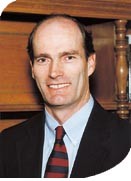 Bill Bonner is the
founder and president of Agora Publishing, one of the world's most successful
consumer newsletter publishing companies,
and the author of the free daily e-mail The Daily
Reckoning. Bill's passion
for international travel and big ideas are reflected in the company he's
successfully built. In 1979, he began publishing International
Living and
Hulbert's Financial Digest. Since then, Agora has grown to include dozens
of newsletters focusing on finance, health and travel. Since the early '90s
Bill has vigorously expanded from Agora's home base in Baltimore, opening
offices in London, Paris, Bonn, Waterford, Ireland and Johannesburg, South
Africa. Bill's latest book, Mobs, Messiahs and Markets: Surviving the Public Spectacle in Finance and Politics, written with co-author Lila Rajiva, is available now by clicking here: Mobs, Messiahs and Markets Bill Bonner is the
founder and president of Agora Publishing, one of the world's most successful
consumer newsletter publishing companies,
and the author of the free daily e-mail The Daily
Reckoning. Bill's passion
for international travel and big ideas are reflected in the company he's
successfully built. In 1979, he began publishing International
Living and
Hulbert's Financial Digest. Since then, Agora has grown to include dozens
of newsletters focusing on finance, health and travel. Since the early '90s
Bill has vigorously expanded from Agora's home base in Baltimore, opening
offices in London, Paris, Bonn, Waterford, Ireland and Johannesburg, South
Africa. Bill's latest book, Mobs, Messiahs and Markets: Surviving the Public Spectacle in Finance and Politics, written with co-author Lila Rajiva, is available now by clicking here: Mobs, Messiahs and Markets
|