Too much retail
Rob Peebles
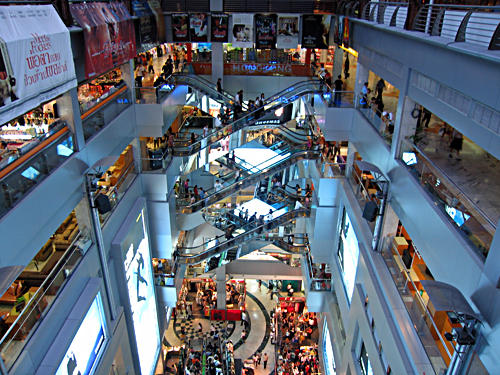 The following may be so hard to believe that many will consider it urban legend. But there was a time, long ago, when there were not enough stores. The following may be so hard to believe that many will consider it urban legend. But there was a time, long ago, when there were not enough stores.
It’s true. Ask anyone from the Pre-Mall Era (PME) and they will tell you that shoppers in most American towns were once limited to a Sears & Roebuck, a J.C. Penney, a local department store or two, and, maybe a Tandy Leather. Tandy Leather, for those who don’t remember life without Sharper Image, was the perfect store for families who loved making their own belts. These stores are not so easy to find these days.
The point is, not so long ago – ok, a pretty long ago – America was severely under-stored. Kids relied heavily upon the Sears catalog to come up with a Christmas list and to burn off some early December energy. Otherwise, kids would beg for even more trips to Radio Shack, the brand new retailer that sold high tech toys, like the transistor radio you soldered together yourself that could almost fit into a suitcase. (Back then, Radio Shack was also part of the Tandy empire, an organization enamored with the high margins that came with having customers assemble their own products.)
But that was a long time ago. It was before Nordstrom knew your shoe size, and before there was an entire store in the mall devoted to shaving. This was so long ago, in fact, that Mr. Abercrombie and Mr. Fitch still wore their shirts.
Over time, thanks largely to the malling of America, the store shortage went away. In the process, Peter Lynch made Magellan fund investors a bundle in retail stocks by betting that consumers never met a chain they wouldn't help expand until it cannibalized its own sales.
But the retailers didn’t know when to stop. According to a website that follows this sort of thing, the amount of store space per capita in this country doubled between 1990 and 2005. Meanwhile, consumer spending grew at less than half that rate. After decades of new malls and new chains to go into the malls, America is now the "The most over-retailed country in the world (and) hardly needs more shopping outlets of any kind," according to a PricewaterhouseCoopers report.
At last, according to Fortune’s Suzanne Kapner, retailers are cutting back on their expansion plans. Chicos, Starbucks, Wet Seal and Walgreens are making noises about slowing store openings. She also notes that retail analyst Richard Hastings sees return on invested capital tanking for the retailing giants Target, Kohl’s and even Wal-Mart. Already, Wal-Mart has announced that it is slashing U.S. capital expenditures from $12.2 billion last year to $8.3 - $9.2 billion in fiscal 2010.
Ms. Kapner dutifully notes that store closings were up double digits in the first half of the year, with only 10% of the closures related to bankruptcy situations. The fact is, much of U.S. retailing is either slowing growth or scaling back. It would seem that all those store openings over all those years are catching up with the retail industry - just as the home equity ATM is running out of cash.
Larry Kudlow is not going to believe this, but this retrenchment could actually affect the U.S. economy.
Hiring in retail, along with construction hiring, has been a boon to the economy over the past several years. Although hardly the contributor it was a couple of years ago, at least retail new hires are positive.
The same can’t be said for the year-over-year change in the construction segment where employment turned negative early this year. Together, new hires in those sectors accounted for as much 28% of employment growth during the last half-decade of credit bubble reflation.
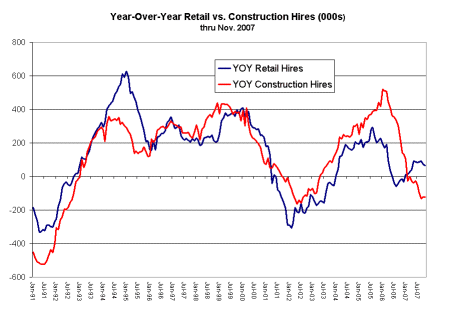
So while it makes sense that retail’s building binge would have to reverse eventually, it’s also logical that years of credit excesses would affect more of the economy than just a small group of subprime lenders.
Retailers and their employees look to be yet another victim.
http://www.prudentbear.com/
***
|