Living
Debt Free
David
Akerberg
Welcome
to an educational journey into the banking and money world. You
are about to learn how the success of the LI-BO Enterprises mortgage
challenge process is possible.
Think
about the following questions, and if you can answer "yes" to any
of them, LI-BO Enterprises could provide the most valuable service
you will ever use:
- Would
you like to know if there is fraud in your mortgage contract?
- Would
you like to learn how your signature at the closing table
actually created your mortgage funds?
- Would
your life improve if you suddenly owed no more mortgage payments
and had thousands of additional dollars?
- Would
you like to have a debt-free life?
- Would
you like to get a court recorded document stating your mortgage
has been discharged?
Here
is what one recorded document states from an actual client.
"Certify that the above mortgage and the debt secured by
such mortgage are fully paid, satisfied and discharged, and that
the mortgage is fully and forever released from the property described
therein".
(The above document was filed at the Court Recorder's office
by the Trustees.)
If
you answered "yes" to any of these questions then keep reading
and learning. After this, contact your referrer or whomever sent
you to this educational material and take the next step. LI-BO
Enterprises can provide the most valuable service you will ever
use in setting you free from debt.
Start
Living Debt Free Now!
"The
Shocking Verifiable Truth about Banking and Loans"
And
by following the steps below, if you can prove anything
I say here about the "loan" agreement to be wrong, you will
receive $500. I'll even tell you how. I put my money where
my mouth is.
Get
your bank president, bank auditor, bank controller, CPA, attorney,
the local sheriff and judge, and get your congress members. Get
them all together in the same room even. It does not matter. The
law is the law. Facts are facts. And the laws and the facts
are documented here, including quotes from Federal Reserve publications!
The shocking,
verifiable truth about the "bank loan agreement" is revealed
here.
So
if you believe that all lenders should be repaid, as all ethical
and honest people do, you will find that banks don't think so.
I urge you to read every word on this site. I believe you
will be absolutely thrilled - and furious - when you realize
what is being done to you and millions of other Americans.
It's disgraceful and it's disgusting.
And
it's why the following outstanding people made the following quotes:
 Henry
Ford said: (see Why a Bankrupt America by Devvy Kidd)
Henry
Ford said: (see Why a Bankrupt America by Devvy Kidd)
"It
is well enough that the people of the nation do not understand
our
banking and monetary system, for if they did, I believe that there
would be a revolution before tomorrow morning."
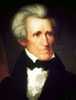 U.S.
President Andrew Jackson said: (See The American Bulletin,
11/91)
U.S.
President Andrew Jackson said: (See The American Bulletin,
11/91)
"If
the American people only understood the rank injustice of our money
and banking system, there would be a revolution before tomorrow
morning..."
Sir Josiah
Stamp, President of the Bank of England during the 1920s:
"Banking was conceived
in iniquity and was born in sin. The bankers own the earth. Take
it away from them, but leave them the power to create deposits,
and with the flick of the pen they will create enough deposits
to buy it back again. However, take that away from them,
and all great fortunes like mine will disappear. And they ought
to disappear, for this would be a better world to live in. But,
if you wish to remain the slaves of bankers and pay the cost
of your own slavery, let them (bankers) continue to create deposits."
 Judge
Martin Mahoney wrote the following about a case he ruled
over, The First National Bank of Montgomery v. Jerome Daly,
December 7, 1968: (See 17 Am. Jur. 85, 215, and 1 Mer. Jur. 2nd
on Actions, Section 550)
Judge
Martin Mahoney wrote the following about a case he ruled
over, The First National Bank of Montgomery v. Jerome Daly,
December 7, 1968: (See 17 Am. Jur. 85, 215, and 1 Mer. Jur. 2nd
on Actions, Section 550)
"There
is no lawful consideration for these Federal Reserve Notes
to circulate as money. The banks actually obtained these notes
for the cost of printing. A lawful consideration must exist for
a note...
"The
activity of the Federal Reserve Banks...and the First National
Bank of
Montgomery, is contrary to public policy and contrary
to the Constitution of the United States, and constitutes
an unlawful creation of money and credit for no valuable consideration.
Activity of said banks in creating money and credit is not
warranted by the Constitution of the United States.
"The
Federal Reserve Banks and National Banks exercise an exclusive
monopoly and privilege of creating credit and issuing notes at
the expense of the public, which does not receive a fair equivalent.
This scheme is obliquely designed for the benefit of
an idle monopoly to rob, blackmail, and oppress the
producers of wealth [you and me and our ability to work and be
productive].
"The
Federal Reserve Act and the National Bank Act are, in their operation
and effect, contrary to the whole letter and spirit of
the Constitution of the United States, for they confer
an unlawful and unnecessary power on private parties; they hold
all of our fellow citizens in dependence; they are subversive
to the rights and liberation of the people.
"These
Acts have defied the lawfully constituted Government of the United
States. The Federal Reserve Act and National Banking Act are
not necessary and proper for carrying into execution the legislative
powers granted to Congress [See Article 1, Section 8, Clause
5 of the Constitution of the United States] or any other powers
vested in the government of the United States, but on the contrary,
are subversive to the rights of the People in their rights
to life, liberty, and property...
"No
rights can be acquired by fraud. The Federal Reserve Notes are
acquired through the use of unconstitutional statutes and fraud.
The law leaves wrongdoers where it finds them. Slavery and all
its incidents, including peonage, thralldom, and the debt created
by fraud is universally prohibited in the United States. This
case represents but another refined form of slavery by
the bankers. Their position is not supported by the Constitution of
the United States."
 Two
weeks after Judge Mahoney ruled in favor of Daly, and wrote the above,
he was assassinated.
Two
weeks after Judge Mahoney ruled in favor of Daly, and wrote the above,
he was assassinated.
"Now
it's Time for YOU to Discover What
You Are NEVER Supposed to Know"
 The
truth about ANY alleged "loan" you ever received from any bank
or other lending institution has been carefully hidden,
carefully kept out of your education. So it's not your fault that
you haven't heard the following information before. You're not
ever supposed to know. But if you can read, now you will know...
The
truth about ANY alleged "loan" you ever received from any bank
or other lending institution has been carefully hidden,
carefully kept out of your education. So it's not your fault that
you haven't heard the following information before. You're not
ever supposed to know. But if you can read, now you will know...
The
Bank or Credit Card Company Advertises to Loan You Money...
If
I were to loan you $100, my assets would decrease $100. When a
bank or other "lending" institution "lends" to you or anyone else,
their assets actually increase!
The
Federal Reserve Bank of Chicago used to publish Modern Money
Mechanics. They stopped largely because of this quote from
Page 6, Last Paragraph:
 "What
they [banks] do when they make loans is to accept promissory
notes in exchange for credits to the
borrowers' transaction accounts. Loans (assets) and deposits
(liabilities) both rise by [the amount of the "loan"]."
"What
they [banks] do when they make loans is to accept promissory
notes in exchange for credits to the
borrowers' transaction accounts. Loans (assets) and deposits
(liabilities) both rise by [the amount of the "loan"]."
Now,
when was the last time you lent money to a friend and suddenly
found you had more funds?
So
the "lending" institutions (including credit card companies) "accept
promissory notes in exchange for credits to the borrowers' transaction
accounts." What exactly does that mean?
Accepting
Your Promissory Note...
Now,
when the lending institution "accepts" your promissory note in
exchange for credit to your transaction accounts, that means that
they add money (they credit money) to your checking account(s),
but not the one(s) that you know you have. The funds for the
addition to the "secret" account(s) came from depositing your promissory
note! (Except the credit card companies actually deposit your
application/agreement - and monetize it even if you are not approved!
Again, you provide the source of the funds that are deposited into
your account.)
How
can they do that? Well, they're bankers. Your promissory note is
a note.
Look
at a dollar bill. It says "Federal Reserve Note" on it, doesn't
it? You bet. See, a "note," according to The Dictionary of Banking
Terms, 4th Edition, by Thomas P. Fitch, is "legal evidence of a
debt or obligation."
That
means that a "note" is "owing money." That means that what we call "money" or "cash" today
is really owing money.
So
since "money" now days means "owing money," and your promissory
note is "legal evidence of a debt or obligation," (owing money) that
counts as "money" and can be deposited.
If
you have any "loan" agreements or a copy of any of your promissory
notes to
hand, I would suggest that you read it over carefully. Here's why:
 Nowhere
in your agreement does it tell you that the lending institution
who provided the "funds" was going to NOT loan you money, but
use your own note to fund the "loan" back to you. Nowhere
does it tell you that, according to their own bookkeeping entries,
the bank was going to make you provide the value for your own "loan" first.
Nowhere
in your agreement does it tell you that the lending institution
who provided the "funds" was going to NOT loan you money, but
use your own note to fund the "loan" back to you. Nowhere
does it tell you that, according to their own bookkeeping entries,
the bank was going to make you provide the value for your own "loan" first.
Their
bookkeeping entries tell the truth about what happened. Nowhere
in the agreement or note does the bank say that they're going to
alter the note (in violation of UCC 3-407, by the way) and change
it into a draft AFTER you sign it so that it modifies "in
any respect the obligation of a party" and they do it
by "an unauthorized addition of words...to an incomplete
instrument relating to the obligation of a party."
Those
words are "Pay to the Order of". Either way, and even without those
words, they can deposit the note, which is "legal evidence of a
debt or obligation" into your "transaction accounts" that you don't
even know you have. And now I don't think they even give you a
deposit receipt!
 The
current banking system has redefined "money" as "owing money." So
they can apparently do it. But they still haven't given any consideration
for the alleged "loan" have they? (No.) And that's against
contract law, which basically says that there must be
valuable consideration from both sides (both or all parties involved
in an agreement) for an agreement to be valid. And contract law
also gives the requirements of contracts so they may be valid and
enforceable.
The
current banking system has redefined "money" as "owing money." So
they can apparently do it. But they still haven't given any consideration
for the alleged "loan" have they? (No.) And that's against
contract law, which basically says that there must be
valuable consideration from both sides (both or all parties involved
in an agreement) for an agreement to be valid. And contract law
also gives the requirements of contracts so they may be valid and
enforceable.
There
must be a meeting of two (or more definitely stated) minds in
one and the same intention. The intention must be a distinct
and common intention. The intention must be communicated. There
must be at least two definite parties. The two parties must be
in agreement as to exactly what each must do. There must be a
reference to legal relations. The consequences must affect the
parties involved. The rights and liabilities must be definite.
And the thing to be done or foreborne must be reducible to a
money value.
A voidable contract
is one that is capable of being affirmed or rejected at the option
of one of the parties, but which is binding on the other. Hey, they
wrote the agreement, make them explain it.
Anyway,
all they've done is converted your promissory note into "funds" that
they then "loan" back to you. And now you have to pay them again,
plus interest? Huh? Where in the agreement does it say that you
are providing the value (through the promissory note that they
received from you) to fund your own loan? Is that a mutual intention?
Is that what you agreed to? Is that written in the agreement?
Have
you ever said to a friend, "Here, sell this asset I'm giving
you for free, then return the money to me, and I'll pay
you that much more plus interest."??? Absurd, huh? Yet that's what
happens when banks and credit card companies "lend" you credit.
Did you ever really agree to that? What ever happened to "Truth
in Lending?" I don't know about you, but I never agreed to be that
stupid.
When
You Deposit Money into Your Checking Account...
 When
you deposit money into your account, it's exactly like
loaning the bank money. You have lent the bank money,
and the bank's assets and liabilitites both increase by the amount
of the loan.
When
you deposit money into your account, it's exactly like
loaning the bank money. You have lent the bank money,
and the bank's assets and liabilitites both increase by the amount
of the loan.
Now,
we know that an "asset" is something of value, something that is
either money or can be sold for money, right?
A "liability" is
something that you "owe," isn't it?
Banks
MUST Use Generally Accepted Accounting Principles (GAAP)
In
banking, they MUST use something in accounting called "GAAP," which
stands for Generally Accepted Accounting Principles (or something
equally as strict). We know that because of Title
12 of the United States Code, ß1831n.
One
of the Generally Accepted Accounting Principles is called the "Principle
of Matching," which basically says that for each asset there has
to be a matching liability, and vice versa. The Principle
of Matching.
In
other words, when you deposit your payroll check, the bank has
a new asset in the amount of the deposit. If you deposit $1,000,
the bank now  owns
that $1,000. They also have a new matching liability, which
means that they owe you that $1,000 whenever you want it.
owns
that $1,000. They also have a new matching liability, which
means that they owe you that $1,000 whenever you want it.
So,
while their assets increased, so did their liabilities. Hm, when
you deposit your payroll check, it works out just like when you
took out a bank "loan"... Both the assets and liabilities of the
bank increased.
Doesn't
that seem a little strange to you?
How
We Got Our Current Banking System...
Would
you like to know how it got this way? How we got such a fraudulent
banking system? How our so-called "leaders" in Congress let such
a thing be unleashed upon the very people they're supposed to help
protect?
You
know, though, this type of banking system is not new in history.
We actually find out about it in the Bible. Look at St. Luke 6:34,
just 3 verses after the Golden Rule.
"And
if ye lend to them of whom ye hope to receive, what thank have
ye? For sinners also lend to sinners, to receive as much again."
"...to
receive as much again" (plus interest!) See, Jesus knew that this
type of banking system consisted of merely accepting one form of
money, then changing the form of the money to another. That is
exactly the same as being paid again for a "loan." Exactly.
 Then
we move forward in time and find our Forefathers creating a Constitution
to protect us against such a system. "Congress shall have the power...to
coin money, regulate the value thereof and of foreign coin..." (Article
1, section 8, clause 5) Congress does not coin money, they don't
regulate the value of money, either. And they certainly do not
regulate the value of foreign coin.
Then
we move forward in time and find our Forefathers creating a Constitution
to protect us against such a system. "Congress shall have the power...to
coin money, regulate the value thereof and of foreign coin..." (Article
1, section 8, clause 5) Congress does not coin money, they don't
regulate the value of money, either. And they certainly do not
regulate the value of foreign coin.
Then
in the Constitution we have that "No State shall...make any Thing
but gold and silver Coin a Tender in payment of debts." (Article
1, section 10)
When
was the last time a State worker was paid in gold and silver coin?
You know, like judges, like senators, like governors, sheriffs,
etc.? Don't they take an oath to uphold the Constitution
of the United States? I guess they only uphold the parts they want
to.
Anyway,
then we get to 1910. Something started then. Something dreadful.
It was the planning of our current Central Bank, the Federal Reserve
System. The Federal Reserve Act was not only unconstitutional,
but it also provided for no way to pay off the principle amounts
borrowed! It said how the interest was to be paid, but not
the principle. Amazing ommission, isn't it?
Listen
to The Creature from Jeckyll Island by G.
Edward Griffin, the foremost researcher on the planet of
the start of the Federal Reserve System. You will need the RealOne
Player to listen.
Yes,
The Banking System is Unconstitutional, But SO WHAT
Judge
Martin Mahoney said so in 1968. Then he was promptly assassinated.
Hopefully you just listened to The Creature from Jeckyll Island,
so you have a good idea why.
If
you listened to The Creature from Jeckyll Island above,
you know how the money is created in this nation. It affects the
government the same way, and yet not one branch of government
will stand up and do a thing about it. They won't because they're
absolutely terrified of what will happen to them. Look at what
happened to Judge Mahoney!
It
is said in political philosophy that the people get the government
that they, as an aggregate whole, deserve. Given that's true,
it would then be up to the people to KNOW what is going on and
to learn more and stand up for themselves - as an aggregate whole.
And pass the word on to the people they know.
 You
see, this "banking system" has been around a long time. It plays
on the hard work and labor and future earnings of decent, productive
people.
You
see, this "banking system" has been around a long time. It plays
on the hard work and labor and future earnings of decent, productive
people.
In
an attempt to expose what the banking cartel was doing, Congressman
Charles Lindburg read a letter he had received anonymously. This
was in 1917. The letter is called The
Banker's Manifesto. I highly recommend that you read that.
(It isn't any wonder that Mr. Lindberg's son was kidnapped, was
it? Golly, who do you think was responsible for that?)
What
about the CPAs who Audit the Banks?
The
bank auditors must know GAAP. They must know the laws that pertain
to the banks. They also have to follow those laws and GAAP. There's
another principle of GAAP called Representational Faithfulness,
which basically requires that the bookkeeping entries prove
the event that caused the bookkeeping entries to have to be recorded.
In other words, if two CPAs looked at the bookkeeping entries,
they could tell what event took place, and they would be in agreement
on what exactly the event was.
Don't
you think they could call one or two people and ask if they lent
money to the bank? That's what the bookkeeping entries show - and
they know it! Where is the paperwork that proves that the
bank lent you any of their own assets?
 So,
what are the bookkeeping entries? NOW - please get your accountant
to read this if you don't understand this, get the auditor
who performed the audit at your bank, get the bank president, judges,
sheriffs, attorneys, ANYONE who understands anything about accounting,
the law, enforces the law, interprets the law, or makes the law.
DO NOT just take my word for it because that alone might not convince
you - and it shouldn't. The bookkeeping entries will PROVE that
the substance (bookkeeping entries) do not match the form (the
agreement).
So,
what are the bookkeeping entries? NOW - please get your accountant
to read this if you don't understand this, get the auditor
who performed the audit at your bank, get the bank president, judges,
sheriffs, attorneys, ANYONE who understands anything about accounting,
the law, enforces the law, interprets the law, or makes the law.
DO NOT just take my word for it because that alone might not convince
you - and it shouldn't. The bookkeeping entries will PROVE that
the substance (bookkeeping entries) do not match the form (the
agreement).
People think that
banks lend other depositors' money. You're about to discover
that isn't true.
Now,
a check is not money; it is an order to pay money. A check acts
like cash, but is not cash. The bank records legal tender as an
asset, so there is a matching liability, which means the bank also
owes that legal tender to the depositor. In order for a check to
be "good" there must be funds in the account it is drawn from.
The
bank must disclose all material facts, otherwise it is fraudulent
concealment. If the bank refuses to loan, say, $100,000 to someone,
then they can not possibly own the promissory note. The bank MUST
follow Federal Reserve policies and procedures.
 The
bank replaces other depositors' cash with the promissory note.
The promissory note is recorded as an asset to the bank, and there's
the matching liability. Then the bank cuts a check to the "borrower" or
to whomever is supposed to receive the check.
The
bank replaces other depositors' cash with the promissory note.
The promissory note is recorded as an asset to the bank, and there's
the matching liability. Then the bank cuts a check to the "borrower" or
to whomever is supposed to receive the check.
Then
the "borrower" or whoever receives the check deposits the check.
The check transfers bank liability from one account to another
account within the system. So the deposited check is recorded as
an asset, and the demand deposit account (checking account) is
recorded as a liability.
The
check cancels out because it is recorded as an asset and a liability.
What remains is the asset called a promissory note, and the matching
liability - which remains on the books! Both parties benefitted,
both the bank and the "borrower." There was an exchange, value
for value. Nowhere in the bank loan agreement did you agree to
have the bank deposit the promissory note (recorded as an asset)
they received from you for free. Did you agree to that? And that
fact was never revealed to you, was it?
Again,
you don't have to believe me. Go to your local bookstore and find
the Dictionary of Banking Terms, 4th Edition, by Thomas
P. Fitch. Look up the word banking power. That's just as
good as Modern Money Mechanics, if not better, at proving
the point.
It's
just like when you buy a gallon of milk, you exchange your $2.50
for the gallon of milk - you don't now owe the store another $2.50
plus interest, do you? Well, if the store is the bank, and the
gallon of milk is the "loan" then YES, apparently you do think
you have to pay again. Even though you already provided the source
of the funds.
 The
bookkeeping entries show that you first loaned the bank the value
from which they then cut a check. According to the bookkeeping
entries, there were two loans exchanged - one from you to the bank,
and one from the bank to you. Only the bank refuses to
pay back the loan from you to the bank!
The
bookkeeping entries show that you first loaned the bank the value
from which they then cut a check. According to the bookkeeping
entries, there were two loans exchanged - one from you to the bank,
and one from the bank to you. Only the bank refuses to
pay back the loan from you to the bank!
Is
that equal protection? If the bank repaid your loan to
them, the "loan" from them to you would be ZERO. (See "Claims
and Defenses in Recoupment" in the Uniform Commercial Code.)
When
you make a deposit, the bank's assets and liabilities increase
by the amount of the deposit. When a bank "lends" to people, which
logically seems as though their assets should decrease, the assets
increase by the amount of the loan, and their liabilities increase
by the amount of the loan - just like when you deposit money into
your checking account!
If
the promissory note is recorded as a bank asset with a matching
liability, and they decrease the amount of the liability owed by
the amount of your promissory note, where is the loan? The bookkeeping
entries do not show that there was a loan, merely a value for value
exchange. Both parties benefitted.
It's
the same economic effect as counterfeiting, stealing and swindling.
That's why lawful money is gold and silver coin - Because the
current banking system could not exist if we used only lawful money.
Anyway...
How
to Prove Me Wrong and Receive $500
This
is how you can prove me wrong; it's the only way you can prove
me wrong and collect your $500: Take this
affidavit to the bank president where you have a loan. The
bank must have at least 30 employees. Have the bank president sign
the affidavit saying I'm wrong, have it notarized, then agree to
bring the affidavit to a national press conference where someone
special will ask the bank president about a couple hundred questions
about the bank loan agreement in front of all those folks from
the press. The bank president must tell the truth and nothing but
the truth. Then, when the bank president honestly answers the questions
in front of the national press conference and hands over the signed
and notarized affidavit, that bank president will receive $1,000
and you will receive $500 for finding that bank president.
So
far in over seven years, not one bank president has stood up to
the challenge. Will yours? Is your bank president honest enough,
daring enough, and willing to tell the truth about the bank loan
agreement? Will your bank president accept the challenge proving
me wrong? Find out. Ask. Prove me wrong. I dare you.
What
Are You Going to Do?
Are
you going to sit back and do nothing, and let the unethical and
distinctly harmful banking system we have continue to infest your
life? Take your childrens' future labor? Take yours? And keep this
nation in its downward spiral?
Or
do you want to do something about it? Do you want to stop
being an economic slave? Or is it okay for the funder of your "loans" to
not be repaid? It's your choice.
 If
you want to do something about it, we invite you to contact us
by getting back to the person who brought you to this website.
If
you want to do something about it, we invite you to contact us
by getting back to the person who brought you to this website.
One
more thing: I won't talk anything about "debt consolidation" or
refinancing or bankruptcy. The bank loan works how the bank loan
works, and that includes credit cards. If you think it's unfair
how the credit card companies can just deposit your applications
(which they call agreements) like money, then charge you
insane interest on top of it, then please call me or request
more information.
Thomas
Jefferson told us all how to keep our freedom when he said, "Know
the law and be well-disposed to use it." That's the secret. And
the law says that something can be done. But it won't be done if
only a few people stand up and say, "Enough!" It takes the
voices of millions of voters who are outraged by what the
government has allowed to happen.
So
you're welcome to think whatever you want. If you have the courage
to do the research, if you have the strength to face the truth,
then we urge you to contact us by getting back to the person who
brought you to this website. This is only the tip of the iceberg.
Sincerely,
Gedag, Inc./David Akerberg
865-686-5944
gedag.inc@livingdebtfree.info
Further
Research
- The
Two Faces of Debt published by the Chicago Federal Reserve
Bank. (Pay particular attention to page 21 on the electronic
document, which is labeled page number 19. Read the 4th paragraph
there. )