|
Navigating 2012 Forecast for the Pavlovian Economy
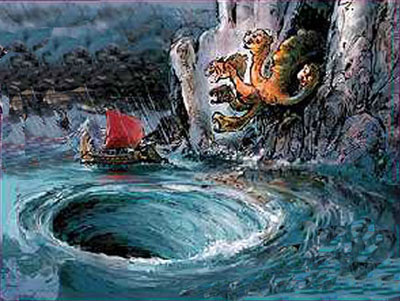
Are We Expecting Rain, or Just More Dog Slobber? The beauty of a system's perspective is that one develops a habit of looking simultaneously at both immediate problems and the context on which they depend. With this approach, it is easier to step "out of the box" and identify the dynamics that are giving life to a problem. In this month's newsletter, we will look at how the western world is responding to the economic crisis and how these strategies will affect each of us. For those who may not remember their science history, Ivan Pavlov was a Russian scientist famous for having conducted important behavioral experiments. Pavlov presented a stimulus, such as ringing a bell, every time he gave food to a dog. The dog eventually associated the sound of the bell with the food and would begin to salivate when he heard the bell, even if no food was presented. All of us in modern society are thoroughly soaked in Pavlovian dog slobber. Marketers, for example, rely heavily on Pavlovian and other types of behavioral conditioning to shape our purchases. Politicians also use this approach, appearing with patriotic symbols or music to elicit associations in the minds of voters. And by the way, are you feeling a little less charitable towards marketers and politicians right now? If so, the reason may be that you were just subjected to behavioral conditioning. Recent research has shown that evoking feelings of disgust while people think of a certain group can prejudice them against that 1 group . If you were very strongly disgusted by the imagery of being soaked in dog slobber, research also shows that you are more likely to be a political conservative. We point this out simply to underline how easy it is for all of us to be read and manipulated as part of mass society. Although the dog slobber imagery is a bit unpleasant, it is metaphorically far more accurate than most of us care to admit. When you read, listen to, or watch mass media, it is extremely useful to keep these concepts of behavioral conditioning in mind. You may not know whether to laugh or cry at the absurdity of the interplay you observe on the world stage. Our interest here is the current economic crisis, which provides an excellent example of behavioral conditioning. Keynesian Economics at the Crossroads Keynesian economics, with all its variations, serves as the primary theoretical construct for most western economists. One of the tenets of this model is that monetary stimulation can be used to overcome periods of recession or weak economy. The idea is that when the economy is doing poorly, the government (or central banks) can lower interest rates, spend extra money on infrastructure, or even create money directly to solve the problem. Once businesses and individuals have more money in hand, the Keynesians believe they will spend more and the economy will begin growing again. Whether one is a fan of this theory or not, it is fairly obvious that injecting money into the system sometimes results in at least short-term benefits. Businesses require capital to grow. In late 2007, the U.S. Federal Reserve began the stimulus process by reducing their target rates, which had peaked a little above 5%. By the time of the financial crisis in 2008, they had lowered this rate to 2% and afterwards lowered it even further towards 0%. The Fed was easing monetary policy in order to stimulate the weakening economy. By the beginning of 2009, the Fed target rate was just about as low as it could go and so ceased to serve as a method for further Keynesian stimulation. The Fed then began employing unconventional tools for monetary stimulation such as QE (quantitative easing or money creation) and "Operation Twist" (flattening the bond curve). Trying to Hypnotize Scylla and Charybdis
They are now trying to lift the economy by creating only the hope of further stimulus. A recent contribution to this strategy came from European Central Bank head Mario Draghi who told us he would take action and then stated boldly, "believe me, it will be enough." His statements soon fell flat as it became clear that the ECB had no current mandate for further actions. Various Fed governors in the U.S regularly release similar, though somewhat more subdued statements. An Economy Choking on its own Slobber Each time one of these hope- inducing statements is released by a central banker, the markets react positively, at least for a while. But the positive reactions are becoming weaker and shorter- lived while the negative reactions are appearing more frequently once the public realizes that the hope is not followed by real action. Hopefulness is naturally associated with financial stimulus in certain situations. If a company receives funding to develop a new product they believe in, for example, they have reason to be excited. Competence plus financial support and hard work are expected to result in success. But western economies are not in the position of the company above. Instead, they are massively in debt already, their productive capacity has been traded for increases in financial and other service industries, and demographics are unfavorable as an increasing percentage of the population enters retirement age. The systemic and structural conditions in which monetary stimulus can assist the economy are now a thing of the past. Stimulus in any of its current conventional or unconventional forms will not work and instead simply injects more money into the system that is not associated with productive activities. This problem is a viscious circle that feeds on itself as a disproportionately large and increasing fraction of the economy unproductively chases these funds. The central banks are attempting to lift the economy by promoting false hopes of further monetary stimulation, which they know can only create additional problems. In behavioral terms, this situation is like trying to train Pavlov's dog to dine on and be satisfied with his own saliva. It reflects a serious disconnection from reality, one of the key systemic problems of today's world. Too many people still cling to the idea that governments and central banks can solve all problems at the same time that crony capitalism and systemic corruption grow to astronomical levels. When the Economic Dog Begins to Growl Here at Holophi, we study the global economy systemically and read the publications of a multitude of other analysts who dig deeply into the intricacies of the markets and economic indicators. A few of these analyses are outstanding while most others remain trapped in outdated concepts and models. But one does not need to master all the complicated financial minutiae to understand where the economy is heading. The Keynesian bag of tricks is almost empty and the current approach of relying on the fading memory of a conditioned response will not work for long. The central banks will string the markets along for a little while longer before they are forced to try more rounds of actual stimulus. These actions will create short- lived euphoria followed by a gradual awakening to the fact that stimulus only creates price inflation, more misallocation of resources, and further degradation of the economy in general. Hope may spring eternal, but it is the ability to eventually see through damaging misconceptions that allows living systems to survive. Despite the constant talk of recovery, a major global economic dislocation is rapidly approaching. The timing and particular trajectory of the process will depend on the growth of public awareness, governmental and central bank responses, and various other systemic features and instabilities. Indicators for this coming series of events are clear and we will be discussing and tracking them in a new publication for those who are interested. What Became of Pavlov's Dog? One of Pavlov's experimental dogs can still be found (stuffed and preserved) in the Pavlov Museum in Ryazan, Russia. I hope someone can similarly preserve for posterity a representation of today's economy. While Pavlov's dog still appears with a certain dignity even after serving as an experimental subject and after several decades of preservation, I am quite sure no one will similarly compliment the memory of today's economy. Our economic system is loaded with approximately a million billion dollars worth of derivatives along with enormous and rapidly increasing amounts of debt and money. These illusionary representations of wealth far exceed the real wealth and productive capacity of the human race. While the day of reckoning for this folly has been postponed, it cannot be canceled. Instead of dealing with reality, our leaders look to stimulus and more debt to address the problems. European countries that historically suffered currency collapse and reset their systems when their debts grew too large are now being moved farther into danger with even more debt. And as an increasing number of cities and states in the U.S. face bankruptcy, few of the leaders have the courage to admit the truth that the current path is unsustainable. When the representation of wealth (various forms of money) exceeds the amount of real wealth, the consequence is simple to predict. Someone will lose. Either everyone will lose as money creation inflates the price of everything, or large groups will lose as financial institutions collapse. So far, we have seen some of both and we will continue to see more. Our Pavlovian economy is soon on its way to the taxidermist. Have you prepared and said your farewells?
The entire globe has knitted itself ever more closely together during the past several decades. The frequent and near immediate interactions we humans have with each other are creating something new and fascinating. That is, we are together functioning as a dynamically integrated system, or in scientific parlance, what we would call a complex or emergent system. Scientific research in this area, though still in its infancy, is revealing more and more about how we can actively and effectively work with a system as a unified whole - a functioning organism. We also continue to learn more about why attempts to work with older, hierarchal and linear concepts of causality and change do not work well in closely interacting systems, especially during times of rapid change. Holophi CH brings this new way of thinking and acting to the service of your organization. We offer you the tools, insights and worldwide adaptive networks of expertise that are needed for success in today's environment of change. We enjoy sharing our ideas and approaches, and invite you to contact us to discuss how we may help you benefit from these new methods that are powerfully attuned to our present times. Sincerely, Paul Gailey, PhD
|
 |
 |
 |