Send this article to a friend:
June
05
2026
|
Send this article to a friend: June |
Should We Demand a Fort Knox Audit?
First things first: according to the Associated Press, a former senior CIA official, David Rush, has been accused of stealing more than $40 million in gold bars from the federal government. Investigators say they seized more than 300 gold bars, roughly $2 million in cash and luxury watches from his home. That is a serious story all by itself. Now, it does not prove anything about Fort Knox. We should be clear about that right away. One alleged theft case involving one official is not evidence that America’s sovereign gold reserves are missing, leased out, miscounted or secretly moved. But it does raise a fair question:
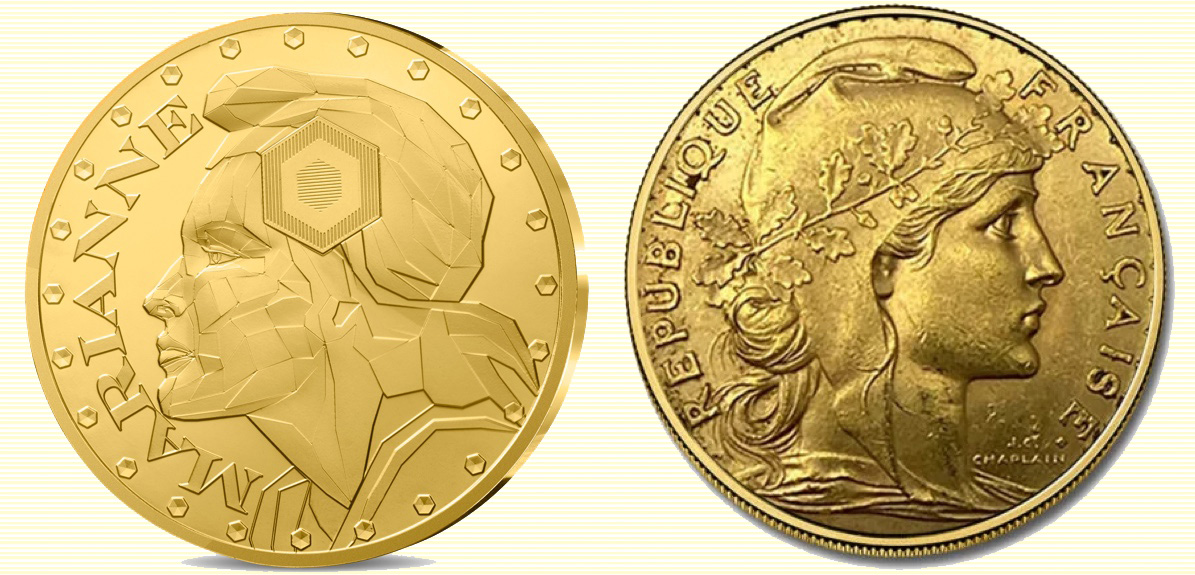
That question has become newly relevant because President Trump has again called attention to America’s sovereign gold reserves, including the gold stored at Fort Knox. The U.S. Mint says the U.S. Bullion Depository at Fort Knox holds 147.3 million ounces of gold – roughly half of Treasury’s stored gold. Now, I don’t think the strongest version of this story is “the gold is gone.” There is no public evidence for that claim. The stronger story is simpler – and, in my view, more important: Why are we expected to take so much of the modern financial system on faith? That question goes far beyond Fort Knox. We live in a world where money is increasingly abstract. Paychecks arrive as direct deposits. Savings exist as numbers on a screen. Government debt expands in figures so large they almost stop feeling real. Central banks create behind-closed-doors policies that filter down into grocery bills, mortgage payments and retirement plans. But most Americans never get a plain-English explanation of why their dollars don’t buy as much as they used to. Against that backdrop, Fort Knox still matters because it is easy to understand. A bar of gold is not a theory. It is not a policy model. It is not a promise from a central banker or a number on a spreadsheet. It either exists or it doesn’t. That is why the public fascination with Fort Knox never really goes away. It is not just about the metal. It is about trust. To be fair, Treasury has addressed this issue before. In testimony from the Treasury Inspector General, officials described audit procedures for deep-storage gold, including annual audits from 1975 to 1986, official joint seals and later financial-statement audits. According to that testimony, by the end of that process, 97% of Mint-held U.S. government gold had been audited and placed under official joint seal, with no significant discrepancies reported. That's important, and we should not ignore it. But here’s the problem: Official procedures do not necessarily translate into public confidence. Especially not today. In an age of sticky inflation, rising government debt and growing skepticism toward institutions, “Trust us” does not carry the same weight it once did. Not because every institution is corrupt. Not because every official statement is false. But because Americans have been asked to "Trust us"too many times, while watching the cost of living rise faster and faster, year after year. There are legitimate security reasons Fort Knox is not open to the public. No serious person expects America’s gold vaults to operate like a museum tour. But security doesn't mean the same thing as secrecy. Assets in a precious metals depository are safe, insured and totally transparent (with regular audits and constant monitoring). You can even schedule a visit to many depositories to confirm your assets yourself. My point is merely this: Safety and certainty are not opposites. A careful, credible and public explanation of America’s gold verification process would not weaken confidence. I believe an audit of our gold reserves would strengthen public confidence significantly. That's the real lesson here. Not that the gold is missing. Not that every rumor deserves belief. But that physical gold still occupies a unique place in modern economics because it represents something rare in the modern financial system: Finality. No counterparty chain. No digital abstraction. No complicated promise that depends on someone else’s solvency, honesty or competence. Just ownership. And that is exactly why so many Americans are thinking more seriously about physical precious metals today. France’s e-Marianne asks an old question in a new wayAt first glance, France’s new Marianne gold coin sounds like a return to monetary seriousness. The Monnaie de Paris, the sovereign mint of France has launched the Marianne Gold, described as a physical 0.999 fine gold coin. It's named after the famous Marianne designed by sculptor and engraver Jules-Clément Chaplain, minted from 1899-1914. Like the designs on American numismatic gold coins, Marianne herself is a symbol rather than an actual person. She's the "Lady Liberty" of France. Personally I've always had a soft spot for the historic 20 francs Marianne. The best I can say about the new design is, well, it's different:
The Monnaie de Paris's new Marianne gold coin (left) vs. the historic Marianne 20 francs gold coin (right). Images via Monnaie de Paris. Le Monde tells us the new Marianne will come in four standard weights, just like the American eagle gold coin: 1 troy oz, 1/2 oz, 1/4 oz and 1/10th oz. According to the mint, those who buy the gold coin receive it directly and secure it themselves. That part matters. Direct ownership is simple. You either have the coin or you don’t. But the more interesting part of the story is the e-Marianne. The Monnaie de Paris describes e-Marianne Gold as “digital bullion” managed online, with a value that fluctuates with the gold price and the possibility of conversion into physical gold. The mint itself presents the key distinction clearly: Marianne Gold is owned directly by the investor; e-Marianne offers flexibility and online management. That is the core tradeoff of gold ownership in one sentence: Tangibility versus convenience. And that tradeoff is becoming more important by the year. To be clear, I am not saying every digital gold product is bad. That would be too broad. Digital structures can offer convenience, easier transactions and lower storage concerns. Sometimes, digital gold-type assets are available for sale in extremely small quantities, a big advantage for families who struggle to save enough to buy a one ounce gold coin. For some people, those features may be appealing. I'm not going to argue with that. But buyers should understand what they own. Physical gold in your possession, or stored by a proper custodian in your name in a fully allocated account, that's one kind of asset. A digital claim on gold allegedly held somewhere by someone else is an entirely different kind of asset. One depends on your custody. The other? Well, its value depends on a chain of promises: One from the mint, another from the custodian, yet another from the storage partner. Its relative liquidity is subject to the redemption terms and conditions at every level. Ownership is subject to the contracts signed and the legal structure in place. During a crisis or time of emergency, would the rules be subject to revision? That last part is important. During normal times, convenience can feel like the main concern. Who wants to think about vaulting, shipping, storage, insurance or physical delivery when everything else in our financial lives can be managed from a smartphone app? But trust me on this: Crisis conditions are exactly when the fine print matters most.
Those are not wild questions. They are the basic questions any saver should ask before confusing financial exposure to the price of gold with actual ownership of gold. And this is where France’s e-Marianne becomes more than a quirky European product launch. It is part of a much larger trend: The financial world keeps trying to make gold more "convenient" by making it less physical. That should make us pause. Because storing and holding physical gold is not some annoying flaw in the concept. In many ways, it is the point. As programmers say, It's a feature, not a bug. Physical gold is valuable precisely because it is not someone else’s liability. It does not require a payment network to function. It does not depend on a central server, or high-speed WiFi connectivity. It does not need a login, password or PIN number. An e-Marianne may be convenient. A physical Marianne is simpler, and, I would argue, more secure. In uncertain times, simple has its own kind of wisdom. Think about it! Do central bank gold reserves take the form of bullion bars stacked in highly-secure underground vaults? Or on a password-protected server in the cloud? That is the broader lesson for American families, too. Whether we are talking about France’s new gold coin, digital gold tokens or every othermodern gold-price-linked financial derivative, don't ask, “Is it tied to gold?” The important question is:
For savers concerned about inflation, government debt and economic instability, that distinction is not academic. It's the whole point. As a safe haven store of value asset, physical gold bullion cannot be improved. They'll keep trying, though. Paper gold can move fast – physical gold is differentWe were not going to have a story about digital gold without also talking about paper gold. CME Group’s gold futures market is one of the major places where global gold prices are discovered. CME describes gold futures as offering “greater capital efficiency,” and its gold margins page emphasizes the scale of the market, saying the benchmark gold futures contract trades the equivalent of nearly 27 million ounces daily. That phrase – “greater capital efficiency” – sounds technical. But the basic idea is straightforward. Futures markets allow traders to control a much larger notional amount of gold with a smaller amount of money posted upfront as margin. That margin is not a normal down payment. It is more like a performance bond, designed to ensure the trader can meet obligations on the contract. This is where things get interesting. The paper gold market is not fake in the sense that it is imaginary. These are regulated contracts. They serve real purposes for producers, refiners, commercial users and traders. But they are not the same thing as owning physical gold. A futures contract is a financial instrument tied to gold. A gold coin or bar is gold. That distinction matters because leverage can make paper markets move very quickly. When margin requirements rise, some leveraged traders may reduce their positions because they cannot or do not want to post additional funds. When margin requirements fall, participation can become easier. Those changes can influence short-term price action, especially in fast-moving conditions. But margin changes are only one factor. Gold and silver prices can also respond to currency moves, central-bank demand, inflation expectations, industrial demand, geopolitical stress and overall confidence in the financial system. So I would be careful about saying any one exchange “controls” gold. That overstates the case. The more defensible point is this: Paper markets can influence the price of physical metals, even though paper claims and physical ownership are very different things. That is frustrating for many bullion owners. I understand why. If you own physical gold or silver as a long-term store of value, it can be aggravating to watch short-term price swings driven by leveraged trading. It can feel like someone is playing a fast casino game on top of an asset you bought for stability. But that also clarifies the difference between trading and owning. Futures markets are designed for liquidity, hedging and price discovery. Physical precious metals are designed for ownership, custody and long-term diversification. Those are not the same goals. And they do not serve the same kind of person. A short-term trader may care about margin rules, contract expirations and intraday price action. A saver may care about whether a portion of their wealth exists outside the banking system, outside digital claims and outside the promise-heavy structure of modern finance. Both markets can affect the quoted price. But only one gives you physical ownership. That is the thread connecting all three stories this week. Fort Knox reminds us that national trust still rests, at least symbolically, on physical gold. France’s e-Marianne reminds us that digital convenience often comes with counterparty questions. CME’s paper gold market reminds us that price and ownership are not the same thing. For Americans trying to make sense of inflation, rising costs and growing financial uncertainty, the lesson is not to chase every headline or believe every rumor. The lesson is to understand what you own. Because in a financial world built increasingly on promises, physical precious metals remain unusually straightforward. They do not solve every problem. They do not guarantee outcomes. They are not a magic shield against every economic storm. But they do offer something many savers are finding harder to locate elsewhere: A tangible asset with a long history of holding value when confidence in paper promises begins to fade. That is why diversification into physical gold and silver is not about speculation. It is about asking a practical question: How much of your savings should depend entirely on institutions keeping their promises? For anyone asking that question seriously, learning more about physical precious metals is a sensible place to start.
|
Send this article to a friend: