
Send this article to a friend:
June
08
2026
|
Send this article to a friend: June |
Why Solar Power Is Booming Under Trump
This massive growth trend has caused solar power’s share of the United States energy mix to surpass that of wind power, nuclear power, and hydropower. And while many if not most of these renewable projects were greenlit and funded before Trump took office and rolled back tax cuts and subsidies for solar and wind projects, experts say not to expect a major cooldown any time soon. In fact, FERC projections show that solar energy installations will continue to grow by 86 gigawatts over the next three years, at which point the sector will surpass coal as well, Trump’s $700 million plan to revive coal production notwithstanding. And, by 2029, if FERC’s projections hold true, solar will become the second-largest energy source in the national energy mix, behind natural gas. And natural gas is currently facing headwinds that are further boosting clean energy adoption. A shortage of gas-fired turbines is slowing additions of gas-fired power to the grid, and incentivizing investing into renewables and energy storage in its stead. “Renewables and storage continue to be the fastest way to get new electrons on the grid until additional gas-fired generation can be built,” NextEra Energy CEO John Ketchum was recently quoted by Reuters. Despite a policy climate that is considerably cooler for solar photovoltaics, political factors are simply overshadowed by broader economic realities that are continuing to drive clean energy investing and adoption forward. The massive energy demand coming from the tech sector has spurred massive investment into all kinds of energy projects, with a noted emphasis on renewables and next-gen clean energy technologies like nuclear fusion, enhanced geothermal, and space-based solar power. Indeed, we are currently “living in what arguably is one of the best periods to invest in renewables in the US over the last 20 years” – at least according to Miguel Stilwell d’Andrade, chief executive officer of Portuguese electric utilities company EDP, who recently sat down with Tim McDonnell, climate and energy editor for the nonpartisan news outlet Semafor. And d’Andrade is putting his money where his mouth is: EDP is directing more than half of its capital expenditures, approximately USD $5.3 billion, toward United States renewables projects over the next three years. d’Andrade opined that when it comes to clean energy investing, the United States is a better market than Europe. But European energy markets are strangled by red tape, and markets there are still struggling to recover from the energy crisis caused by Russia’s war in Ukraine, not to mention the current energy crisis spurred by the United States’ and Israel’s war in Iran. Comparatively, according to d’Andrade, U.S. energy and tech markets are better poised for growth. The conceptualization of the United States, and not Europe, as the cradle of clean energy growth is rich in irony due to the divergent and counterintuitive stances of Washington and Brussels. As the United States attempts to revive the dominance of the petro-state under the Trump administration, the European Union has continued to push a decarbonization agenda. “Try as he might to the contrary, Trump will likely preside over the biggest clean-energy buildout in US history,” concludes McDonnell. By Haley Zaremba for Oilprice.com
|
Send this article to a friend:
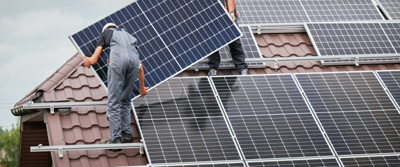 Despite the Trump administration’s pivot away from renewable energies, solar continues to dominate new energy additions in the United States. Newly released data from the Federal Energy Regulatory Commission (FERC) shows that at the close of last year, solar energy additions were the single largest form of new energy capacity installations for the