
Send this article to a friend:
April
01
2026
|
Send this article to a friend: April |
The Power of Sunrise
There is also the phenomenon of moral injury, a concept explored in modern studies of veterans and first responders. Moral injury differs from trauma. Trauma concerns fear and survival; moral injury concerns meaning. It arises when one’s actions — even justified ones — strain or violate one’s core beliefs. Yet moral injury does not manifest uniformly. For some, conviction that an act protected the innocent or preserved life serves as a stabilizing anchor. The internal narrative becomes: I did what was required. I stood between harm and those who could not defend themselves. If Donne is right that every death diminishes humanity, perhaps the diminishment is not always located in the individual conscience but in the collective condition — in the tragic reality that human societies repeatedly produce circumstances where killing becomes thinkable, even necessary. The burden, then, is shared more broadly than political slogans allow. Reflection — even when uncomfortable — is a sign not of diminishment, but of ongoing moral life. ~ J.O.S. The World Is Red In Tooth ~ The Sun Still Rises There is an old and resonant line, borrowed from John Donne’s seventeenth-century meditation, that has echoed through centuries of moral philosophy: “Any man’s death diminishes me, because I am involved in mankind.” The sentiment has long been claimed, with varying degrees of sincerity, by those on the farther reaches of the political left. It suggests a universal kinship so intimate that the snuffing out of any single life leaves the whole fabric of humanity frayed. Yet the same voices have, in recent memory, found ways to exempt certain deaths from this cosmic accounting – deaths that occur when ideology demands it, when the narrative of justice or revolution requires a sacrificial body on the altar of progress, much like when a Black Lives Matter member murdered five police officers in Dallas, Texas and an Antifa member assassinated a Trump supporter in Portland, Oregon. We have watched street militias from Portland to Minneapolis chant slogans of collective mourning while celebrating, or at least excusing, the torching of businesses, the beating of bystanders, and the occasional corpse left in the gutter when the cause seemed righteous. The contradiction is not new; it is as ancient as the first tribal war cry. What is newer is the speed with which modern media and selective conscience can launder it into moral consistency. Yet the lived experience of conflict — whether in war, self-defense, or violent confrontation — often resists such abstractions. There are those who testify, that taking a life in extremis did not diminish them but instead relieved them of a burden: the burden of imminent death, of threat to loved ones, of the heavy calculus of survival. The philosophical tension lies precisely here — between universal moral entanglement and particular moral necessity. Across history, societies have struggled to reconcile these poles. In The Republic, Plato wrestles with justice as harmony — each part fulfilling its proper function. War, in that classical sense, was not celebrated but accepted as an unavoidable aspect of political life. Later, thinkers like Thomas Aquinas articulated the doctrine of just war, attempting to establish criteria under which killing might be morally permissible. The effort itself is telling: humanity has long felt compelled to impose structure on the chaos of lethal conflict, to draw lines between murder and combat, between aggression and defense. I have known such moments. On two separate occasions, years apart, circumstances left me no honorable alternative but to end a life. The first was a violent criminal whose intentions were clear and immediate; the second, enemy combatants in the humid green jungle hell of Central America during the proxy wars of the 1980s. In neither case did the act diminish me. Quite the opposite. A weight lifted, as though some invisible ledger had finally balanced. My own life, and the lives of others who stood nearby, continued because one man’s decision to aggress had met its natural terminus. The sun rose the next morning. Birds still sang in the trees of Nicaragua and El Salvador. I did not wake screaming. I did not stare at my hands as though they belonged to a stranger. I simply went on. The only guilt I have ever carried is the faint, almost embarrassed guilt of not feeling guilty at all. It is a curious inversion: to stand before the mirror of conscience and find no shadow where society insists one must appear. Modern psychology has names for this – moral injury, survivor’s guilt, post-traumatic growth – but they feel like imported garments that do not quite fit the body that actually lived the events. The men I killed had chosen paths of predation. They had, by their own volition, placed themselves outside the circle of mutual forbearance that makes civil society possible. One sought to rob, rape, or murder; the other fought under banners that promised the destruction of liberty for entire villages. Their deaths were not tragedies in the classical sense. They were consequences, as predictable as gravity when a man steps off a cliff while insisting the ground will yield. Philosophers have wrestled with this for millennia. Aristotle distinguished between acts done under compulsion and acts done with full knowledge and consent. Aquinas spoke of “double effect,” where the intended good may unavoidably produce an evil that is foreseen but not desired. Locke and Jefferson built entire theories of natural rights around the principle that the aggressor forfeits his own right to life the moment he violates another’s. Yet none of these frameworks fully captures the lived texture of the moment itself – the metallic taste in the mouth, the strange slowing of time, the sudden silence after the shot. In that silence, one does not hear the abstract choir of diminished mankind. One hears only the ragged breathing of the living and the absolute stillness of the dead. The far-left appropriation of Donne’s line often carries an implicit demand: that the individual subordinate his survival instinct to a collective sentimentality. But survival is not sentiment; it is biology sharpened by millennia of selection. The same species that produced cathedrals and symphonies also produced the sharpened flint and the atlatl. We are, all of us, descendants of those who killed when necessary and then returned to the fire to tell stories about it. The refusal to acknowledge this duality – to pretend that every death is equally sacred regardless of context – is not compassion; it is a form of moral cosplay that collapses the moment real stakes appear. When Antifa militants firebombed a police station or BLM-associated riots left shopkeepers bleeding, and BLM thugs murdered 77-year-old retired police captain, David Dorn, in the street in St Louis in June of 2020, the same voices that quoted Donne suddenly discovered exceptions. The dead in those cases, it seemed, had diminished no one worth mourning because their politics were inconvenient. The hypocrisy is instructive. It reveals that the “every man’s death” doctrine is rarely applied universally; it is a rhetorical weapon, selectively unsheathed. What, then, does it mean to live with the knowledge that one has sent another soul – however deserving – into whatever awaits beyond the veil? The question is not academic for those who have done it. Dreams come, unbidden. Not nightmares of remorse, but vivid, almost documentary replays: the angle of a body falling, the smell of cordite and jungle rot, the look in a man’s eyes the instant he understands the transaction is final. These visitations do not accuse; they simply insist on being remembered. They are the mind’s way of filing the paperwork of survival. Over time they lose their power to disturb. They become part of the internal archive, no more corrosive than memories of a difficult surgery or a near-miss on the highway. And then there is forgiveness – not of the dead, who require none, but of the self. When I tell anyone, the few who have heard this story, that “I forgave myself a long time ago”, the phrase lands strangely on the ear because forgiveness is usually imagined as a transaction between offender and offended. When the offender and the forgiver are the same person, the grammar feels broken. Yet the act is real. It is the quiet recognition that the moral books are closed, the debt paid in the currency of necessity. Most people never have to perform this strange accounting. They live sheltered lives where the closest they come to mortal decision is choosing whether to swerve for a squirrel. For them, forgiveness remains a Sunday-school abstraction. For those who have stood in the breach, it becomes a hard-won practicality: the only way to remain useful to the living. It is far from hubris for me to declare that certain men sought death by way of their anti-social actions. This is preferable to the self-flagellation that turns every defender into a penitent. History is littered with the corpses of those who hesitated because they internalized the diminishment doctrine too thoroughly — soldiers who froze, civilians who offered their throats in the name of universal brotherhood, only to discover that the brotherhood was not reciprocal. The jungle fighters of El Salvador and the alley defenders of American cities share a common lesson: mercy extended to the merciless is not virtue; it is suicide by other means. Still, the question lingers like smoke after the gunfire: Can a man truly walk away lighter? The answer, borne out in thousands of veterans’ memoirs, police after-action reports, and the private reflections of those who will never publish them, is yes – provided the act was not born of cruelty but of clear-eyed necessity. The weight that lifts is the weight of helplessness. To act decisively when action is required restores a sense of agency that passive philosophies erode. One feels, not exalted, but restored to the proper scale of things: a creature capable of both creation and necessary destruction, neither angel nor demon, but simply human in the fullest, most unflinching sense. In the end, the philosophical bent that insists every death diminishes us all asks us to mourn indiscriminately, as though the universe itself keeps a ledger of sorrow. Perhaps it does. But the individual conscience keeps a different ledger – one that tallies threats neutralized, innocents preserved, and the quiet continuation of ordinary days. On that ledger, the entries sometimes read in red ink, yet the final balance is not diminishment but continuance. The men who died by my hand earned their final destinations in Hell. I sleep at night. I dream, occasionally, and wake without apology. Forgiveness, that strangest of human inventions, feels less like absolution and more like simple recognition: the world is what it is, red in tooth and claw and ballot boxes and bullets, and those who would preserve its fragile decencies must sometimes pay the bloody butcher’s bill. For the individual who has taken a life, political rhetoric often feels distant. The act itself is intensely personal, immediate, embodied. In that moment, theory collapses into survival. Later, reflection for some begins: Did it diminish me? Did it elevate me? Did it simply mark me? And for others, we simply placed our face in our hands for a moment of prayer, breathed in and out deeply, shook our head and shoulders a bit and moved on to greet the next day. To live with that truth is not to celebrate violence but to refuse the lie that violence can always be negotiated away by sentiment. It is to accept that some men, by their choices, place themselves beyond the circle, and that the circle must be defended. The sun still rises. The weight is gone. And in the strange arithmetic of survival, that is enough. 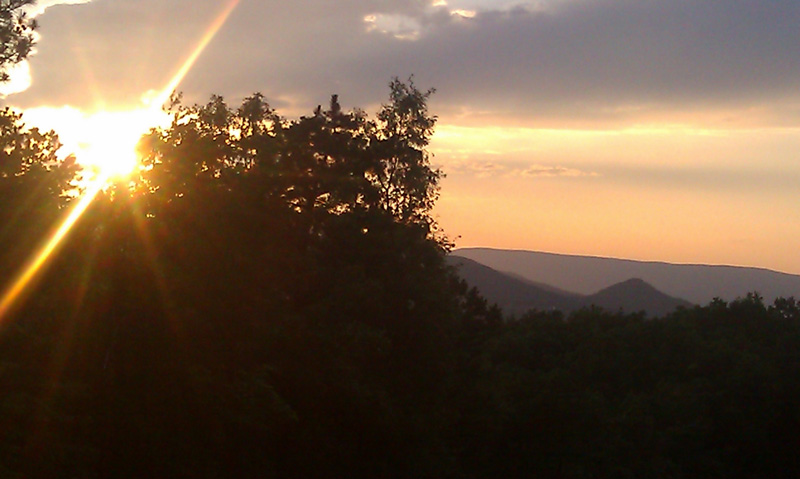
…and with each Sunset… there shall be another Rise of the Sun!
|
Send this article to a friend:
 |
 |
 |

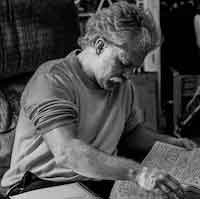 Justin O. Smith has lived in Tennessee off and on most of his adult life, and graduated from Middle Tennessee State University in 1980, with a B.S. and a double major in International Relations and Cultural Geography – minors in Military Science and English, for what its worth. His real education started from that point on. Smith worked 8 years for the LaVergne Fire Department – two years as their clean-up boy – and became a working fireman at age 16, working his way through college and subsequently joining the U.S. Army. Since then he primarily have contracted construction and traveled – spending quite a bit of time up and down the Columbia River Gorge, in the Puget Sound on Whidby Island and down around Ft. Lauderdale and South Beach. Justin currently writes a weekly column for The Rutherford Reader in Murfreesboro, TN, which he calls home, in addition to being a frequent contributor to the Federal Observer – and spend as much time as possible with his two beautiful and intelligent daughters and five grandchildren. Justin Love God, Family and Our Majestic and Wonderful America, and am a Son of Liberty.