|
|
Small businesses "close to the breaking point"
Business consultants and operators say there are growing signs that the double body blow of recession and credit crunch are taking a heavy toll on U.S. small businesses, defined as enterprises with 500 or fewer employees. "The situation has clearly worsened for many small businesses in the past few months," said George Cloutier, head of Orlando, Florida-based American Management Services Inc. "They have used every source of funding they know to stay alive. They have maxed out their credit cards, they've depleted their 401(k) (retirement plans) and borrowed from family and friends," said Cloutier, an industry consultant. Although people like Cloutier welcome recent measures from the administration of U.S. President Barack Obama to get credit to small businesses, they say it is not enough. "We're getting close to the breaking point," he said. Small business is the backbone of the country's job market. According to U.S. Census Bureau data, in 2002 the United States had 112 million workers on payrolls. About 56.4 million of them, more than 50 percent, worked at small businesses. The strain is worsening, leaving business owners like Tom Stephens and his wife Terry facing tough choices. The couple formed educational software and equipment firm Edutronix LLC in 2001. Based in the Detroit suburb of Troy, Edutronix sells computer-aided design packages and cutting-edge products like three-dimensional printers to schools and colleges to "prepare students for the jobs of tomorrow." But last autumn, as Wall Street panic and job losses grew, Edutronix's orders dried up as customers feared budget cuts. "At the end of the third quarter it became clear that things were not going as expected," Tom Stephens said. "That left us with no choice but to make some necessary cuts." With 2008 sales down 40 percent, Stephens cut three of the company's eight staff and nonessential expenses. "I'm not going to wallow in despair because long term, the prospects for spending in education are great," he said. "It's just a matter of waiting this out." Stephens also said he has not even tried to get a loan. "We have a great relationship with our bank," he said. "But all we have heard from inside and outside the banking community is that right now, everything is on hold." Tightening the Screws According to a quarterly U.S. Federal Reserve survey of bank loan officers in January, 69.2 percent of respondents had tightened lending standards for firms with annual sales under $50 million, versus 74.6 percent in October 2008. That sounds like an improvement, but no respondents in either survey said they had eased standards. That hasn't been seen since the Fed's July 2007 survey -- and then only 1.9 percent of respondents had done any easing. Lack of credit has coincided with rising bankruptcies. According to bankruptcy data and management company AACER, in 2008 there were nearly 65,000 U.S. commercial bankruptcy filings, compared with 43,000 in 2007 and 30,000 in 2006. For the first two months of 2009 AACER reported 12,300 bankruptcies, which AACER President Mike Bickford said should put 2009 on track for around 72,000 filings. "We expect a big rise in filings as the year goes on," he said. "March is going to be a very big month." But Weldon Gibson, a consultant at the Lamar University Small Business Development Center in Texas, said the credit market has improved slightly in recent weeks. "It's going to be a struggle to get a loan," he said. "But independent banks are stepping up their lending, often only to specific sectors of the economy. You just have to find them." The Obama administration has taken steps to ease the pain. The $787 billion stimulus package approved by Congress included $730 million for loans for small businesses. On March 16 the administration also said it would buy up to $15 billion in loans made by banks and guaranteed by the Small Business Administration, plus guarantee SBA loans up to 90 percent -- up from the previous limit of 85 percent. "The action taken by the Obama administration is a positive development, but it is not the silver bullet that will solve everything," said Todd McCracken, head of the National Small Business Association, an industry group. "We have got to unfreeze the credit markets for small businesses. Otherwise they won't be able to invest to expand as stimulus money flows into the economy," he said. "If we don't fix the credit markets, the recovery will be strangled in the crib rather than flourishing," he added. (Reporting by Nick Carey; Editing by Peter Bohan and Richard Chang) |
 |
 |

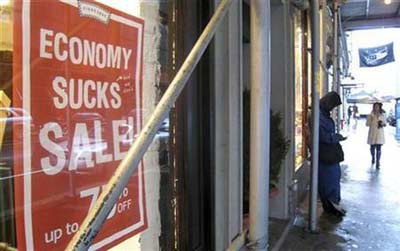 TROY, Michigan (Reuters) - After months without access to fresh loans and facing persistent weak orders many U.S. small businesses, a prime source of jobs for the struggling economy, may be forced to close in coming months.