
March
16
2013
16
2013
|
March 16 2013 |
Banking Big on the Singularity
What am I talking about? Why, none other than that far-fetched, crazy notion called "The Singularity", in which humans are left in the dust by super intelligent machines. Yes, it's crazy. And, yes, many are looking at ways to profit from it. Consider this month's Special Report by the Bank Credit Analyst: "Human Intelligence And Economic Growth From 50,000 B.C. To The Singularity." Wedged right next to their forecast of 10-year Treasury yields and the impact of Chinese monetary policy on commodities is a discussion of humanity's coming "phase transition" through the "widespread use of genetic technologies and implantable neural chips." And I thought I was taking a big leap in 2008 when I proposed machines taking over the financial system. But brain chips! Now we're getting out there. Have we really come that far? BCA seems to think so. In an article recently posted on their site, BCA Chief Strategist Peter Berezin—who worked for the IMF and then at Goldman Sachs as Senior Global Economist—notes that "for the first time in history, we are able to create technologies that quickly boost human intellectual powers."
So what's going on here? Clearly, some of the frightening trends related to the rapid development of technology—like AI and human modification—are now being seriously considered by major research firms and, of course, the deep pockets banking on which direction the Singularity takes us. Although some might envision a dystopian Terminator-like scenario, there will be good things that come out of all this too. Google's new Director of Engineering, Ray Kurzweil, for example, thinks we'll become immortal. Resource scarcity, you ask? Not a problem. Technology will bring manna from Heaven. I have to be honest with you though. I'm not so sure about the future we're creating. Perhaps it was that video produced by the Air Force showing how self-guided swarms of insect-like drones can be used for killing people. Since they can also rely on solar power or absorb the electricity from power lines, we might say they'll operate completely on their own for as long as they want. Or, maybe some of my suspicion comes from those eagerly awaiting a future of AI and cyborgs—take the famous Professor of Cybernetics, Kevin Warwick—who says that "it's difficult to see much of a positive future existence" for those who are against implants or any sort of modification.
It would be tempting to dismiss all of this as nonsense or just refuse to think about it, but the fact of the matter is whether it's five, ten, or twenty years from now, we'll be forced to deal with these issues more and more. Coincidentally, the very same day I came across BCA's 16-page Singularity report covering intelligence and genetic modification, neural implants, and the "Rise Of The Machines", a friend of mine passed along another research piece by Goldman Sachs featuring a slight variation to this familiar meme ("The race against the machines") by asking the question of whether automation will replace much of the financial industry. Given the occasional report of large banks, like Goldman, continually firing staff to be replaced by machines, such a scenario isn't far off. What is more interesting, however, and, I believe, a more accurate glimpse of how the Singularity will play out, was a recent Reuters report on how the world's largest stock exchange, the NYSE, is "readying plans to be able to operate without human traders" and that, if activated, "would represent the first time the 221-year-old exchange would rely entirely on computer systems, without the oversight of floor-based traders". This is, of course, just a backup plan in case of an emergency but, then again, as the Wall Street Journal admits, "Longer term, the NYSE is planning upgrades to enable the exchange to function on an entirely electronic basis." Why do I think this is so significant? Eventually—and I have little doubt about this—the overwhelming majority of exchanges around the globe will be automated, with humans playing a much smaller role in communicating the prices of things we use. Society may deteriorate, social inequality increase, the price of goods worldwide continue to rise, but the large-scale distributed network of algorithms predicting, tracking, and, largely, profiting from the ebb and flow of the things we buy and sell is here to stay. This, I believe, is where the Singularity is emerging. In Part 2 I'll explain why as we look at the "wisdom of the crowd", Keynes concept of the market as a beauty contest, and more.
Cris joined PFS Group in 2002. He holds a B.S. in Mathematics from California State University San Marcos. His professional designations include FINRA Series 7 & Series 63; and he is also currently pursuing the designation of Chartered Financial Analyst. Follow me on Twitter: @CrisSheridan www.financialsense.com |
|---|
Send this article to a friend:
 |
 |
 |
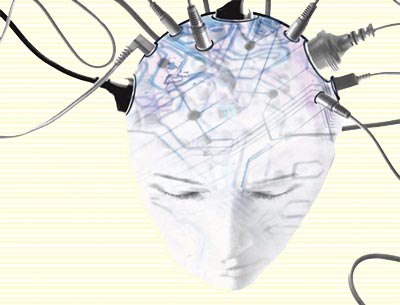 It's amazing how fast things change. Within a relatively short amount of time, ideas once inhabiting the realm of absurd, fringe, or pure fiction have now gained enough influence to draw the attention of congressional hearings, news reports, and, to my latest surprise, the front cover of a prominent research publication read by major institutions, central banks, and governments around the world.
 Puplava Financial Services, Inc. Research Assistant