Send this article to a friend:
January
16
2026
|
Send this article to a friend: January |
The Great Storm Gathers Beyond America’s Horizon
I know one thing for certain. I’ve never been so damned sick and tired of anything in my days, as I am sick to death of seeing these red, radical Communist rat bastards roaming the streets and wreaking chaos, mayhem and destruction at will with only the slightest of push back from American patriots or local law enforcement – corrupted by communist infiltrators in too many instances, e,g, Portland, Philadelphia, Chicago, L.A., NYC – and federal agents. Rather than continuously allowing the Far Left to control the narrative, freedom-loving, liberty-minded Americans had better step up soon to take charge of it and reveal each and every damned fallacy and lie emanating from their foul, evil mouths. As far as I’m concerned, America needs to see many more of these insurgents and domestic terrorists coming to a bad end at the end of a government agent’s firearm or a bullet fired by an American patriot in self-defense. Put a few hundred – even better, a few thousand – of them in an early grave and this crap will stop quicker than you can say “hot biscuit“. G.K. Chesterton once argued that abandoning orthodoxy leads to societal madness. This ties into broader theories of cultural Marxism, inspired by Antonio Gramsci’s “long march through the institutions.” Rather than violent revolution, progressives infiltrate education, media, and government to subvert from within. Immigration accelerates this by altering demographics, potentially shifting electoral maps toward progressive policies. For instance, the 1965 Immigration and Nationality Act – praised for diversity – is criticized for favoring chain migration over assimilation, leading to enclaves resistant to Western integration. In Europe, similar patterns in countries like Sweden have correlated with rises in crime and cultural clashes, fueling right-wing backlashes. In the U.S., sanctuary cities and decriminalization of border crossings are viewed as deliberate erosion of national sovereignty, aligning with globalist agendas that transcend borders – much like the fluid identities promoted in gender ideology. This is more than an attack on Western and Christian principles; it’s a gambit to overthrow the republic. Western civilization, forged in the crucible of Greek philosophy, Roman law, and Christian morality, emphasizes individual rights tempered by communal duties, rule of law, and a transcendent moral order. The family unit – nuclear, heterosexual, and procreative – serves as the microcosm of this order, instilling values like self-restraint and sacrifice. By deconstructing sexuality and family, the left undermines this foundation. Unrestrained autonomy breeds atomization: single-parent households rise (U.S. Census data shows over 25% of children in such homes), fertility rates plummet (below replacement levels in many Western nations), and social cohesion frays. Economically, this manifests in welfare states that replace family with government dependency, as seen in expansive social programs that incentivize non-traditional structures. Politically, it fosters identity politics, fracturing the republic into tribal factions. The “cult of tolerance” demands conformity, suppressing free speech under hate speech laws or corporate censorship. Immigration exacerbates this by introducing multicultural relativism, where all values are equal, eroding the absolutism of Christian ethics. Critics like Samuel Huntington in “The Clash of Civilizations” warned that unchecked immigration could lead to cultural suicide, replacing the melting pot with a salad bowl of incompatible ingredients. Strategically, this overthrow gambit employs a multi-pronged assault. Media amplification normalizes deviance: Hollywood’s portrayal of non-traditional families in shows like “Modern Family” or “Pose” conditions public opinion. Education indoctrinates: Common Core and similar standards incorporate social justice themes, sidelining classical Western texts. Legal activism redefines institutions: Obergefell v. Hodges (2015) legalized same-sex marriage, seen as redefining marriage beyond procreation. Immigration policies, like DACA or amnesty proposals, are framed as compassion but function as voter importation, tilting balances in swing states. The endgame? A post-republican order: perhaps a technocratic globalism where elites manage a deracinated populace. Thinkers like Yuri Bezmenov, a KGB defector, described ideological subversion in four stages – demoralization, destabilization, crisis, normalization – mirroring this trajectory. Demoralization corrupts morals via sex education and media; destabilization disrupts economy and defense through open borders; crisis invites authoritarian solutions; normalization cements the new order. Sometimes I just have to step outside and move along Panther Creek to shake my head in disbelief over the juncture in time we have reached, laughing to keep from crying over the surreal nature of it all and the destruction we have reaped from not reacting strongly and fiercely enough against our enemies-from-within once they first reared their ugly heads from under their rocks. A man needs to keep his sense of humor, even if the world outside may be crumbling down all about him. America: One Big Tavern at Closing Time
There are times in a nation’s life when the air itself feels charged, as if some great storms were gathering beyond the horizon, and anyone with a lick of sense can smell the ozone. America is living through such a moment now. You can feel it in the streets, in the schools, in the digital shouting pits where people claw at each other like starving wolves. Something feverish has taken hold of the public mind, something wild and unbalanced, and it’s tearing at the seams of the Republic like a grizzly at a cabin door. Call it a macrosocial Cluster B crisis if you want the clinical label, but the truth is simpler: the country is being pulled apart by a kind of theatrical madness, a mania of self‑invention and moral grandstanding that has found its most eager apostles among a certain slice of progressive womanhood. And the tragedy is that they don’t see the strings pulling them. They think they’re heroes in some cosmic drama, when in fact they’re actors in a play they didn’t write. J.D. Haltigan, noted psychologist, writes:
This didn’t happen overnight. No nation wakes up one morning to discover that half its citizens have begun speaking in the tones of prophets and martyrs and red, radical Marxist-Maoists of days gone by. No, this sort of thing brews slowly, like a pot left too long on the stove. First came the ACLU of 1925 and then the commie subversives of the FDR era, soon followed by the Black Panthers and the Weather Underground of 1968 rapidly setting the stage and leading into the digital age, with its endless mirrors and echo chambers. A person used to need a stage, a pulpit, or a barroom brawl to make a spectacle of themselves. Now all it takes is a phone and a grievance. And grievances, like ticks in Tennessee, are easy to find if you take a casual stroll through the Blackman Community with the right kind of desperation. The platforms reward the loudest, the angriest, the most wounded. They turn emotional volatility into currency. They turn personal drama into public theater. They turn the fragile into the famous. Just an hour ago, someone told me:
“Antagonize them”? Hell yes, I’m going to throw their stupid, ignorant crap right back in their faces at every opportunity, because they are seeking nothing less than the destruction of this nation, in an intransigent manner that shows no peaceful solutions exist at the moment. And the Good Lord willing, one day in the not-too-distant future the freedom-loving, liberty-minded Americans of this country will move to decimate, neutralize, and, yes, eradicate every last damned red, radical, Democrat Party communist rat bastard, killing or exiling them, from the face of this America I love so well. Perhaps I’d be taking a different tact, if I knew somehow that our enemies-from-within weren’t the enemies I already know them to be. Perhaps, if any of them showed any real love or understanding for traditional America and the Western and Christian principles of freedom and liberty, I’d be more willing to try to make some form of lasting peace with them and close the deep and wide divides between us. But it’s unlikely and a bridge too far, given what many of us already know; these amerikkan rat bastards will never be content until they have completely destroyed the American republic and installed their immoral Marxist-Maoist “god” over all America. Yea – I’m not letting a damned thing go, not after all the destruction and chaos they have wrought in America over the past decade. A casual observer of modern politics might conclude that today’s cultural battles are chaotic, disconnected, and reactive – one week abortion, the next gender identity, then immigration, policing, or speech. But this impression dissolves upon closer inspection. Beneath the churn of headlines and hashtags lies a coherent moral project, one that moves with remarkable consistency toward the same end: the dissolution of inherited moral authority, social boundaries, and ultimately the civilizational framework that produced the Western republic itself. This project is not merely political. It is moral, spiritual, and anthropological. At its center is a single, radical claim: that the individual is sovereign over all inherited structures – over God, over nature, over family, over nation. Everything that constrains desire must be reinterpreted as oppression. Everything that resists dissolution must be deconstructed. To understand this phenomenon, one must begin with the broader cultural shift that has taken place over the last two decades. American society has undergone a rapid transition from a world defined by material scarcity and shared institutions to one defined by digital abundance and fragmented identities. Social media platforms reward emotional intensity, moral outrage, and performative self‑expression. These platforms do not merely reflect personality traits; they amplify them. A person who might once have expressed frustration privately now broadcasts it to thousands. A person who might once have sought validation from a small circle now seeks it from an audience. The psychological incentives of the digital age reward behaviors that mirror Cluster B traits: attention‑seeking, emotional extremity, impulsivity, and the creation of narratives in which the self is perpetually embattled and morally righteous. Call it a macrosocial Cluster B crisis if you want the fancy label. Me, I’d say the nation’s got itself tangled in a thicket of theatrical temperaments – folks who feel first, think second, and apologize never. And the loudest of them, the ones who’ve turned the public square into a stage fit for melodrama, are a certain breed of progressive woman – very similar to Renee Good – who’s been handed a script that flatters her every wound and crowns her every grievance with a halo. Not all, mind you – but enough to make the whole country feel like it’s living inside a morality play written by someone who’s never met a mirror she didn’t adore. Now, don’t mistake me. I’ve known plenty of tough, level‑headed conservative, Christian women who could outshoot, outthink, and outlaugh any man in the Middle Tennessee region. But what we’re dealing with here isn’t toughness. It’s a kind of ideological intoxication – a heady brew of digital applause, moral certainty, and the sweet, sweet taste of being the hero in your own story. And once a person gets a sip of that, well, good luck prying the cup from their hands. The trouble started when the world went digital and every soul with a pulse suddenly had a stage. Used to be, if you wanted attention, you had to earn it – with grit, guts, or a good story told around a fire. Now all it takes is a phone and a flair for emotional fireworks. And let me tell you, the algorithms love fireworks. They gobble up outrage, amplify hysteria, and spit out a version of reality where the calm and reasonable are drowned out by the loud and wounded. Into that roaring furnace marched a new ideology – one that promised meaning to the lost, sainthood to the sensitive, and moral superiority to anyone willing to see the world as a labyrinth of invisible evils. It told people their feelings were sacred, their identities were talismans, and their personal struggles were proof of cosmic insight. And for a certain kind of person – the kind who already lived close to the edge of emotional intensity – this wasn’t just appealing. It was intoxicating. And it’s their fault entirely, as far too many red, radical amerikkan fools – men and women alike – seem to wake up on any given morning these days and decide, “Today I shall become the hero/heroine of a cosmic struggle against invisible forces only I can perceive.” No, this sort of thing brews slowly, like moonshine left too long in a warm shed. First came the digital age, that great big shouting pit where everyone’s got a megaphone and no one’s got a filter. Used to be, if you wanted attention, you had to do something worth noticing – wrestle a bear, strike gold, or at least tell a decent joke. Now all it takes is a phone and a flair for emotional fireworks. And boy, do the algorithms love fireworks. They gobble up outrage like a starving trapper at a free buffet. They reward the loudest, the angriest, the most theatrically wounded. They turn personal grievances into public crusades. They turn insecurity into influence. They turn fragility into fame. It’s like watching a talent show where the only talent required is the ability to cry on cue. You ever walk into a tavern and know, in that first lungful of air, that the whole place has lost its mind? Piano in the corner pounding out something frantic, bartender polishing the same glass for twenty minutes just to avoid getting involved, three different arguments running hot at once and not a sober thought in the room? Or enter another fine establishment – perhaps the Snake Pit Bar & Lounge, maybe the Holiday Inn on Karaoke night – and right off, that the whole place has gone a little sideways? Chairs tipped over, poker chips scattered like groundhog holes, someone yelling about justice while someone else hides under a table praying to a god they don’t even believe in? Well, that’s America these days – a big, rowdy tavern where half the patrons think they’re the sheriff, the other half think they’re the outlaw, and everyone’s forgotten who actually owns the place, except She’s gone a whole lot sideways.
That’s America right now. One big national tavern at closing time, only nobody’s willing to admit the lamps should’ve been turned down hours ago. Into this environment enters a particular strain of contemporary left‑leaning ideology that places extraordinary emphasis on identity, oppression narratives, and the moralization of personal experience. This ideology is not synonymous with all left‑wing thought, nor is it representative of all progressive women. But it has found especially fertile ground among individuals who already experience the world through the lens of emotional intensity and personal narrative. When a worldview teaches that one’s subjective experience is the ultimate arbiter of truth, that one’s feelings are inherently political, and that one’s identity confers moral authority, it creates a psychological ecosystem in which certain traits flourish unchecked.
The result is a kind of ideological‑psychological feedback loop. Individuals who feel a deep need for validation, purpose, and recognition find in this ideology a ready‑made script: they are not merely citizens or participants in a political system; they are heroes in a cosmic struggle. Their personal grievances become evidence of systemic injustice. Their emotional reactions become proof of moral insight. Their social conflicts become battles between good and evil. This is where the language of “Gnostic heroic delusions” becomes relevant – not as an insult, but as a description of a recognizable pattern in which individuals come to believe that they possess special insight into hidden structures of oppression and that their mission is to reveal and combat these forces. Afterall, their demands are so reasonable and righteous, aren’t they? The eradication of all pro-life principles; individual liberty and sovereignty in favor of the collective; capitalism and free markets; toxic-masculinity; heterosexuality; Christianity; traditional families; borders; national sovereignty; and America’s republic among other things. — Like Hell they are reasonable. How could anyone state with a straight face that the red, radical Democrat Party Communists and their supporters are actually more wrong than wrong could ever be imagined to be. At least that’s what the amerikkan rat bastards think, as they worship from within the cult of the Marxist-Maoist ideology. Here however, one should note that absolute truths do exist, and depending on the issue at hand, many times these absolutes can and do serve to unravel a lie, especially in the defense of Western principles. Gnosticism, historically, is characterized by the belief that the world is governed by hidden, malevolent powers and that salvation comes through special knowledge accessible only to the enlightened. In the contemporary ideological landscape, this manifests as the conviction that society is structured by invisible systems of oppression – patriarchy, white supremacy, heteronormativity – and that only those who have undergone a kind of ideological awakening can perceive these forces. This worldview encourages adherents to see themselves as both victims and saviors, oppressed by the world yet uniquely capable of redeeming it. The psychological appeal of this narrative is immense: it offers identity, purpose, and moral certainty in a world that often feels chaotic and disorienting. This is where the Gnostic flavor of the thing becomes impossible to ignore. The old Gnostics believed the world was ruled by hidden powers, and that salvation came through secret knowledge. Today’s ideological crusaders believe much the same, though their vocabulary has changed. They speak of systems, structures, and phantoms of oppression that lurk behind every interaction. They believe they have pierced the veil, that they see what the uninitiated cannot. And once a person believes they possess special insight into the hidden machinery of the world, there is no reasoning with them. They are no longer debating; they are revealing. They are no longer citizens; they are prophets. The trouble is that prophecy makes for poor politics. A democracy cannot function when half its people believe they are engaged in a holy war and the other half are cast as villains in their private morality play. The nation becomes a stage for melodrama, not governance. Every disagreement becomes a showdown. Every compromise becomes betrayal. Every institution becomes a battlefield. And the loudest voices – the ones most rewarded by the digital coliseum – are often those least capable of restraint. When this ideological framework intersects with the emotional volatility and identity instability associated with Cluster B patterns, the result is a form of political engagement that is intensely personal, emotionally charged, and resistant to compromise. Political disagreement becomes existential threat. Criticism becomes violence. Boundaries between personal identity and political ideology dissolve. The self becomes inseparable from the cause, and the cause becomes inseparable from the self. This fusion of identity and ideology is one of the defining features of the current cultural crisis. The consequences for American society are profound. Public discourse becomes dominated by emotional narratives rather than rational argument. Institutions become battlegrounds for symbolic conflicts rather than arenas for problem‑solving. Social relationships fracture under the weight of ideological purity tests. The political sphere becomes a theater of escalating moral drama, with each side convinced that the other represents not merely a different perspective but a form of existential evil. The result is a nation in which dialogue becomes impossible, compromise becomes betrayal, and politics becomes a perpetual state of psychological warfare. Groups that reject traditional moral authority benefit from weakening other forms of authority. The erosion of borders, like the erosion of family and church, reduces the influence of inherited norms – particularly Western and Christian ones – that have historically resisted radical collectivism and its associated tyranny. Moreover, mass immigration into societies that have lost confidence in their own moral foundations accelerates cultural fragmentation. A fragmented society is less capable of enforcing shared standards and more dependent on centralized bureaucratic control. In such conditions, ideology replaces tradition as the glue that holds institutions together. The American republic was not designed to govern a population without shared moral commitments. John Adams famously warned that the Constitution was made “for a moral and religious people” and was “wholly inadequate” to any other. Self-government requires self-restraint. Liberty requires virtue. Borders, like laws, are meaningful only when the people recognize a moral reason to respect them. When a society elevates desire above duty, inclusion above inheritance, and autonomy above obligation, it undermines the cultural conditions necessary for republican government. What follows is not freedom, but management – rule by experts, courts, and administrative states filling the vacuum left by collapsed consensus. The end result is something more subtle and more dangerous – a convergence of ideas that, taken together, dissolve the moral preconditions of the republic:
Each step is justified in the language of compassion. Each move is defended as progress. But the cumulative effect is civilizational exhaustion – a society no longer confident enough to preserve itself. At bottom, the conflict is not about immigration quotas, gender policy, or election cycles. It is about what kind of creature man is and what kind of society he is meant to inhabit. Christian anthropology holds that man is created in the image of God Himself, not self-invented; bound, not autonomous; accountable, yet still sovereign in his own free will. Western civilization, at its best, translated these truths into institutions – family, church, nation, law — that balanced liberty with order. When those truths are rejected, the institutions built upon them cannot survive indefinitely. The slogans will keep changing. The causes will keep multiplying. But the direction remains the same. The question facing the republic is not whether this trajectory is intentional in every mind, but whether it is sustainable at all. History suggests it is not.
Now imagine you’re a person whose emotional needle already swings like a busted compass. Life feels big, sharp, and raw. You want to matter. You want to be heard. Along comes a worldview that tells you your fiery reactions aren’t just personal quirks – they’re proof of moral clarity. Your pain isn’t just pain – it’s data, evidence, testimony. And your job isn’t just to live your life, but to crusade, expose, and correct everyone else. That’s not politics; that’s a myth you get to star in. The trouble is that there isn’t any republic ever built that could run on epics. A republic needs patience, compromise when they are honest compromises, and the ability to laugh at oneself. But try telling that to someone who thinks they’re John Wayne or Rambo with a Wi‑Fi connection. They’re not listening. They’re too busy narrating their own legend.
Yes, the cost is steep. The nation is fraying. Conversations that once required only good faith now require helmets and shields. People walk on eggshells, afraid that a stray word will unleash a torrent of righteous fury. Institutions buckle under the weight of moral theatrics. And the public square, once a place for debate, has become a stage for performance. Modern day America is currently chock full of folks who are nothing more than immoral, disgusting, evil anti-American treasonous villains. They all have had a hand in creating the thousand-mile-per-hour whirlwind of which we are all about to reap the consequences of their ill-intent. They were handed a worldview that sanctifies their emotions, a platform that amplifies their volatility, and a culture that tells them they’re saving the world by shouting at strangers. It’s a dangerous mix, and it’s born of a deep malice and hatred for all America. It’s born of confusion, loneliness, and their hunger to give their meaningless lives some sense of real meaning, even if it destroys everything good and decent about America. They know exactly what they are doing – what they have done – and they revel gleefully and joyously in the destruction they have wrought upon this America I love so well. As one considers how America might find her salvation from this terrible state of affairs currently confronting Her, it’s nice to think that rediscovering the virtues that once steadied Her might help, even though half of us have never abandoned those virtues. But, it’s a fantasy today to imagine that our nation’s red radicals will ever return to a day where we can disagree with them without it resulting in their declaration of war against the republic – where they might actually once again see us as something other than racists, privileged white folk and white supremacists, as real fellow human beings. America’s enemies-from-within are too invested in their ideological doctrines and all the fake fury, outrage and conflict it demands for them to gain and hold power forever, and damn the cost, to the country on the whole, so willing are they to rule over ashes rather than share in the wealth, abundance and prosperity in an exceptional country that still holds great potential for the future under the right circumstances. The damage is real. And if America wants to save Herself, She’s going to need a stiff dose of resurgent freedom and liberty and a long walk in the cold night air. America needs fewer prophets and more strong, knowledgeable men and women grounded in truth, reason and the principles of freedom and liberty, who understand there is a time and a season for all things, even waging war against half the population should it prove necessary. America needs real patriots who see the reality of the tyranny the red, radical Democrat Party Communists seek to impose upon us all and less fools projecting a fantasy of a world that manufactures their grievances to fit their wounded pride, painting a completely delusional picture of the world that is detached from reality. America has weathered storms before – wars, depressions, upheavals of every kind. But this crisis is different because it is psychological at its core. It is not a matter of policy but of identity. Not a matter of law but of emotion. Not a matter of reason but of narrative. And narratives, once they take root, can outlast any election cycle. Unfortunately, for hundreds of complex, dynamic reasons, America has leaped far past any voices of reason today, and there won’t be anybody coming to save us, there won’t be any peaceful political solutions — not anytime soon, not given the current depth and width of our divides as they exist today. America’s Far Left is fomenting more intense civil upheaval and intense violence with each passing day, setting a full blown hot civil war in motion step by step, whether that’s their actual intentions or not. It’s a thing that will be bad for the country, yes, but worse for them in the end, as American patriots are at the end of their tolerance for such anti-American bullshit. In the meantime, sometimes the bravest thing a man can do in the midst of a raging, mindless, lunatic crowd is to step away from it and move outside its perimeter, to have a big laugh and let the cold night air remind him that the world and this old universe is bigger than any one person’s legend — and steadier than the manic depressive mood swings of America’s communist hordes.
Justin O. Smith Has Lived in Tennessee Off and on Most of His Adult Life, and Graduated From Middle Tennessee State University in 1980, With a B.S. And a Double Major in International Relations and Cultural Geography – Minors in Military Science and English, for What Its Worth. His Real Education Started From That Point on. Smith Is a Frequent Contributor to the Family of Kettle Moraine Publications.
|
Send this article to a friend:
 |
 |
 |
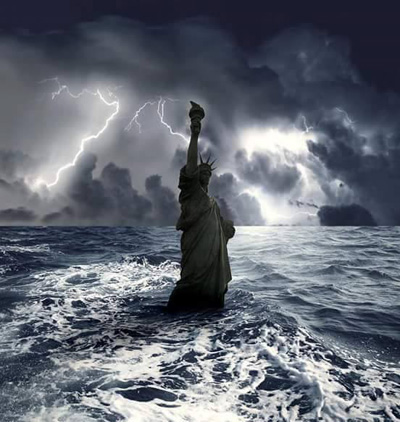 I look around at the modern world, and I see a pattern – a deliberate, well-worn path that leads always in the same direction. The headlines change, the slogans are rebranded, the hashtags sway with the wind, but the destination never does. The left’s moral crusades, when stripped of their sentimental packaging, all spiral back to one central obsession: the deconstruction of God’s design for sexuality, family, and moral order.