The Federal Reserve's expected rate cut won't necessarily stimulate growth and protect the U.S. economy from the threat of recession
The Federal Reserve's rate-setting committee is widely expected to cut the target federal funds rate by a quarter percentage point on Dec. 11, to 4.25%, but it's not clear how effective the move will be in keeping the U.S. economy from sliding into recession.
Four years ago, an economist from the Federal Reserve Bank of St. Louis, Jeremy Piger, demonstrated the problem that's giving Fed Chairman Ben Bernanke and his crew such a tough time. Piger showed that it's a lot harder for the Fed to boost growth by cutting interest rates (as it seeks to do now) than it is for the Fed to slow growth by raising rates (as it tries to do when the economy is overheating).
Specifically, Piger found that in the two years following a one-percentage-point increase in the federal funds rate, quarterly GDP growth fell 1.21 percentage points. In the two years following a one-percentage-point cut in the funds rate, quarterly growth rose 0.53 percentage points.
Slowing growth? Easy. Stimulating it? Hard.
Stringy Economics
The problem is, the Fed can make more money available in the financial system, but it can't force lenders to lend it out—or borrowers to borrow it. Economists refer to this problem as "pushing on a string." You can push and push, but the string just collects in a pile. Nothing happens.
Pushing on a string is more of a problem than usual because in the current credit crisis, lenders are unusually afraid that if they make loans, they won't be repaid. Even the loans that banks make to each other are getting more expensive. William Gross, chief investment officer of giant bond manager PIMCO Bonds, said in his December newsletter, "Fed ease has lowered Treasury yields, but for the rest of the market—the segment that influences the bottom line of U.S. corporations, homeowners, and consumers—not much has changed."
Gross concludes that the Fed "may need to eventually go down to 3% or lower" on the federal funds rate before money will be cheap enough to give the economy some real stimulus.
Solid Job Market?
Luckily for Bernanke & Co., the job market has held up remarkably well in spite of the credit crunch. On Dec. 7, the Labor Dept. announced that the economy created 94,000 jobs in November, and the unemployment rate held steady at 4.7%. That good news lessened the chance that the Fed would cut the funds rate by a half percentage point, which would be seen as something close to an emergency move. Instead, the market is expecting a quarter-point cut.
But the job market is hardly immune from the credit problems. Thomas Higgins, chief economist of Payden & Rygel, wrote Dec. 7 that the six-month moving average of payroll gains fell from 190,000 at the end of 2006 to less than half that this November. Also, initial claims for unemployment insurance have been increasing. Higgins said "the unemployment rate is poised to rise."
It's looking like the Dec. 11 rate cut, assuming it happens, won't be the last one.
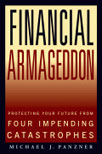 Michael J. Panzner
When the stock market bubble burst in 2000, the collapse that followed wiped out over two-thirds of the value of the Nasdaq Index and decimated the hopes and dreams of millions of Americans. Now, imagine not one, but four such disasters looming on the horizon, all poised to erupt in a massive economic firestorm that will wreak widespread havoc in the months and years to come. The author identifies the most pressing financial risks we face today: First, a burgeoning tower of public and private debt wobbling precariously on a foundation of excess and fraud; second, a multi-trillion-dollar house of cards to which all Americans are exposed but few understand; third, a vast array of largely hidden government promises that will ultimately go unkept; and fourth, a retirement mirage that will leave millions enslaved to the workplace until the day they die.