
Gold Climbs for Second Day as Dollar Drops; Platinum Advances
Gold has risen 25 percent this year as the U.S. currency slid 10 percent against the euro. The metal dropped 4.9 percent last week as the dollar rebounded and the European Central Bank completed the sale of 42 metric tons of gold. "Short term the gold price is still driven by dollar weakness," said Ben Davies, chief executive officer of Hinde Capital Ltd. in London who helps manage the Hinde Gold Fund. "We've seen the market hold up very well during an excessive rate of central bank sales. You have to be impressed." Gold for immediate delivery rose $2.26, or 0.3 percent, to $796.56 an ounce as of 3:51 p.m. in London. Gold futures in New York were up $7.80, or 1 percent. It "seems to be trying to find support" at last month's low of $773, said Robin Wilkin, head of commodities and currency technical analysis at JPMorgan Chase & Co. in London. "You've seen gold continue to track the dollar almost tit-for-tat for a good number of years, and certainly over the last week or so." Traders "continue to use rallies" to cut their holdings, James Moore, an analyst at U.K. Web site TheBullionDesk.com, wrote in a report today. Assets in the StreetTracks Gold Trust, the biggest fund backed by gold, fell to 601.65 tons yesterday from a record 609.33 metric tons last week, World Gold Council data show. Platinum Gains Gold's 20-day moving average is at about $805 and the 100- day at $730. Moving averages point to changes in price trends. A drop in the 20-day moving average below the 100-day level may suggest prices will fall. The UBS Bloomberg Constant Maturity Commodity Index of 26 commodities has climbed 16 percent this year, lagging gold's 25 percent advance. Platinum added $2.50 to $1,463.50 an ounce as the National Union of Mineworkers in South Africa today began its first national strike over safety, curtailing operations that produce three-quarters of the world's output of the metal. Supplies will fall short of demand by 265,000 ounces, the biggest gap since 2003 because of declining output from South Africa, London-based Johnson Matthey Plc said last month. "Further loss of production will only serve to tighten lease rates and push up the underlying price," Moore wrote. Platinum's 20-day moving average is at $1,447 and 100-day at $1,357. The cost of borrowing the metal for one year is 3.723 percent, compared with an average of 3.5012 percent in the past 12 months, according to data compiled by Bloomberg. Borrowing Rates By comparison, the gold borrowing rate for 12 months is 0.47313 percent, compared with an average of 0.2362 percent. Rates reflect expectations about the amount of metal available for borrowing. The 14-day relative strength index for gold is 51. Readings above 70 indicate a price may be poised to fall, and readings below 30 suggest it may rise. The 9:45 a.m. platinum "fixing" price used by some mining companies to sell their production rose $10 to $1,460 an ounce. The palladium fixing was unchanged at $347. The 10:30 a.m. gold "fixing" price rose $6.50 to $790.25 an ounce. Among other precious metals, silver gained 13 cents to $14.295 an ounce and palladium rose $1.25 to $347.50. To contact the reporter on this story: Claudia Carpenter in London at ccarpenter2@bloomberg.net
***
|
 |
 |
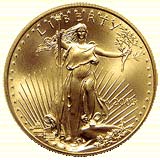 Dec. 4 (Bloomberg) - Gold advanced in London after the dollar resumed its slide, increasing demand for the metal as an alternative investment. Platinum rose after workers went on strike in South Africa.