
Get Ready for $3.70 to $4 Gas in New York, California, Connecticut, Washington Nevada & Other States
While the national average currently is approximately $3 a gallon, a number of states - including California, New York, Connecticut, Washington, Nevada, Alaska and Hawaii - are considerably higher. (New York is over $3.22, while California is up near $3.34.) So if the national average hits $3.40 as EIA predicts, then these states should hit $3.70 to $4 a gallon. EIA forecasts often turn out to be on the low side, so $4 gas could become even more widespread. At the same time, the price of crude could suddenly tumble, which could reduce the amount of the usual seasonal rise in U.S. pump prices. At present, however, crude is selling for roughly 40% less than a year ago, suggesting that at $3 a gallon, refiners' margins are still being squeezed to the point where they may try to push pump prices up as high as the market will allow. What that point is nobody knows for sure, although recent research by a university in California suggests that gasoline demand is a lot more inflexible than it was a generation ago. Whether or not millions of Americans get hit in the face with $4 gas, as pump prices move up in the spring, the impact on consumer sentiment could be significant. With the subprime mortgage mess likely to still be going strong, this extra dampener could conceivably tip the U.S. into a recession. At the same time, U.S. presidential candidates likely will face increased scrutiny regarding a national energy strategy, with investors likely to hear a lot of conflicting recommendations about which alternative energy sources the government should support. OPEC, especially Saudi Arabia, likely will be under even more pressure than it is now to raise production. ***
|
 |
 |
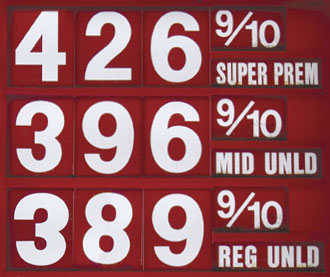 In forecasting yesterday that the U.S. national average for a gallon of regular gasoline will hit $3.40 next spring, the U.S. Energy Information Administration (EIA) set the stage for several normally high-priced states to breach the $4 mark by the Memorial Day weekend at the end of May, which is the traditional start of the U.S. summer driving season.