Send this article to a friend:
December
07
2013

|
Send this article to a friend: December |
|
How the Catastrophe of Modern Farming Provides a Full-Fledged Organic Opportunity
Certainly, it is true that this is predictable, given that Charles is relentlessly focused on a return to something that could be called neo-feudalism. He's organized his own castles so that people can homestead there, pursuing trades, crafts and, of course, farming. I'd actually recommend this as a lifestyle were Charles out of the picture and neo-feudalism not an issue. But when Charles paints it, the vision always includes Charles himself, slightly ill at ease, slope-shouldered and anxious in his expensive suit, beaming out over the sward populated with sweaty peasants. Here's more from Reuters:
Despite the psychology with which Charles is encumbered, he is touching on an increasingly popular trend. Organic farming is hot! In the near future, I'll be introducing an organic farming company that takes advantage of the promise of this kind of farming. Organic farming is a great way to diversify one's portfolio with tangible assets producing an essential product with returns that correlate only weakly with stocks and bonds. Many are aware of the controversy regarding Monsanto and the general reshaping of foodstuffs using modern tools of bioengineering. There is certainly enough concern to make organic farming attractive from both a consumer and investment standpoint. The numbers back it up. The industry is now grossing about $63 billion globally. According to the International Federation of Organic Agriculture Movements (IFOAM), the industry grew an amazing 170%, averaging about 19% per year over the past decade. People are noticing and the industry has attracted vocal proponents. A recent report from Philippe van den Bossche, an organic agricultural advocate and Chairman and Owner of Advancing Eco-Agriculture, stated that the United States is the "largest single market for organic food (and beverages)." The US organic industry has reached $31.5 billion in sales, a 9.5% increase from the previous year. However, despite there being a high consumer demand for organic foods, there are still not enough organic farmers to support the need. Bossche writes that Americans get most of their organic foods from developing countries. Even though the organic farming industry has grown rapidly worldwide, organic agriculture still makes up less than 1% of the world's farming acreage "with 37.2 million hectares planted worldwide across 162 countries." "We're gaining speed but we can't get lackadaisical with our efforts to increase organic farming across the globe. It's proven to have health advantages and to be economically and environmentally beneficial for all involved so we need to keep the momentum going." A recent article in The New York Times, "Banker Bets on Organic Farming," only reaffirms the potential of organic farming. The article focuses on Jeremy Grantham, the chief investment strategist for Grantham, Mayo, Van Otterloo & Co. LLC. Grantham wrote a widely noted article for his firm's quarterly newsletter entitled "Welcome to Dystopia! Entering a Long-Term and Politically Dangerous Food Crisis." Here's more from the article:
Grantham's article succinctly puts economic teeth into the argument that advocates of truly sustainable food make almost constantly: We are going to be eating sustainable, more-or-less organic and mostly regional food within a couple of generations, and the big question is whether we get to that place willingly (it might be too late for that, but one can hope) or whether we go through a dystopic convulsion first. The article goes on to cite other reasons why Grantham intends to be a big backer of organic farming:
According to Grantham, we are "about five years into a chronic global food crisis that is unlikely to fade for many decades." Of course, I am not a believer in much of the above. The Daily Bell has pioneered analysis of dominant social themes having to do with elite promotions involving a reduction in the basic building blocks of life: food, water and air. These scare tactics are elite propaganda, in my view. Nonetheless, I do generally believe it's better if we eat food that is produced "naturally" and more than that, I believe the very focus of elite scarcity memes in this area provides us with another potential "tenbagger" opportunity. Why am I so sure of this particular scarcity meme? Just look! Here's another article on the subject in the UK Telegraph by noted journalist Ambrose Evans-Pritchard. Entitled "Dust to Dust: a man-made Malthusian crisis," it makes a startling announcement, as follows: We must wake up to the global land crisis or face a very real threat of famine ... American scientists have made an unsettling discovery. Crop farming across the Prairies since the late 19th Century has caused a collapse of the soil microbia that holds the ecosystem together. They do not know exactly what role is played by the bacteria. It is a new research field. Nor do they know where the tipping point lies, or how easily this can be reversed. Nobody yet knows whether this is happening in other parts of the world. A team at the University of Colorado under Noah Fierer used DNA gene technology to test the 'verrucomicrobia' in Prairie soil, contrasting tilled land with the rare pockets of ancient tallgrass found in cemeteries and reservations. The paper published in the US journal Science found that crop agriculture has "drastically altered" the biology of the land. "The soils currently found throughout the region bear little resemblance to their pre-agricultural state," it concluded. You might say we already knew this. In fact we did not. There has never before been a metagenomic analysis of this kind and on this scale. Professor Fierer said mankind needs to watch its step. "We really know very little about one of the most productive soils on the planet, but we do know that soil microbes play a key role and we can't just keep adding fertilizers," he said. You see? This has all the dramatic memes in it – and large words besides such as "metagenomic." Scared yet? I'm not. I pretty much believe in human-made action. Human beings can take action to avoid catastrophes of all sorts. We're not potted plants. But I also know an opportunity when I see it. The top elites are focusing on food scarcity and the propaganda is flowing. Even leaving aside the idea that organics are good for you, we are still facing over the next decade or so a deluge of propaganda about starvation. And as usual, when these elites get going on something, they'll probably find a way to make it real. So I don't discount actual starvation. I just discount the idea that it will happen naturally or inevitably. I intend to be on the right side of this dominant social theme. I'm picking and choosing what I'm going to be investing in based on the persuasiveness of the promotions that we track. The first step in this due diligence process, of course, was securing accurate, objective information on the organic foods sector. At High Alert Capital Partners, publisher of The Daily Bell, we asked our researchers to ferret out the details, as we always do when we decide to begin looking very closely at a potential opportunity. In fact, we've built an in-house Institutional Research Team of expert financial analysts, internally separated from the Finance group, to objectively inform our investment decisions. Here's a bit of what High Alert Capital's Director of Institutional Research, Joseph Hogue, CFA, wrote in the report he and the High Alert team of researchers produced for us:
Graphically speaking, he shared, the sector's been looking like this:
How to explain this growth? Consider the following excerpt from Hogue's report:
Hmm... Potentially a tenbagger, indeed. Grantham agrees, by the way. The Times quotes Grantham as saying, "I think a portfolio of farms that are doing state-of-the-art farming over a 20-, 30-year horizon will be the best investment money can buy. So I'm killing two birds with one stone: I want my foundation to make more money than anyone else on the planet, because that gives us much more to spend for the main event — which is saving the planet, in a nutshell." What the High Alert Capital Research Team found seems to bolster Grantham's position:
It certainly looks to me like there's potentially a tremendous growth opportunity here. Of course, this is my opinion, which I've come to at this point in conducting due diligence, part of which process was commissioning this report at High Alert Capital. We have made the report available online here, and you are certainly welcome to peruse the information. Ultimately, however, your decision is yours alone. As we always remind readers, I am not offering financial advice, nor am I overlaying my own moral compass – which always directs my investing decision – atop yours. Do your research, ask for expert advice if you deem that to be wise, then make the best decision for you. As for me, I intend to explore this developing sector further and will continue to share opportunities with readers of The Daily Bell and this Trends and Sector Report as my investigation continues.
Anthony is a pioneer of the alternative media, having founded two major websites that have presented many of the top free-market thinkers working today. Many serious commentators have adopted his insights regarding society's Dominant Social Themes and the Internet Reformation; his personal writing and editorials have been reprinted at numerous sites and read by millions. His insights and perspectives have helped shape the conversation on the Internet when it comes to analysis of the world today and how its sociopolitical and economic trends are evolving. Wile's contributions continue to expand. Now chief editor of The High Alert Trends & Sector Report as well as TheDailyBell.com, Wile has recently written two new books, Freedom Investing (2013) that brings together his sociopolitical insights with economic analysis and The Best of Anthony Wile: Select Editorials and Interviews (2013), a compilation of material first published at TheDailyBell.com from 2010 – 2013. In 2003, Wile published his first book, The Liberation of Flockhead, under the pseudonym Yang. The fourth edition of Wile's well-received book, High Alert, originally released in the summer of 2007, was published in early 2013 to a favorable reception. Congressman Ron Paul said, "High Alert should be read by everyone who wishes to educate themselves about the dangers fiat money poses to American liberty and prosperity. I wish I could get every member of Congress to read this book." Wile has assisted with the completion of over a dozen additional free-market oriented books, working as a collaborative editor to several leading free-market thinkers. As founder and chief editor of well-known, free-market oriented Internet sites such as Free-Market News Network (FMNN) and The Daily Bell, Anthony leveraged more than 20 years of financial and business experience working with growth-oriented companies in a variety of sectors. In aggregate, these free-market educational websites have reached tens of millions of viewers and helped define the cutting edge of alternative news publishing. In 2008, Wile founded a Swiss-based publishing firm and began publishing The Daily Bell, a leading alternative news website that publishes daily news analysis, editorials and exclusive interviews conducted by Wile with leading opinion makers such as Steve Forbes, Jim Rogers, Peter Schiff and Dr. Marc Faber. While living and working in Switzerland in 2009, Wile founded the Liechtenstein-based Foundation for the Advancement of Free-Market Thinking (FAFMT), of which he served as Executive Director until March 2013. Anthony was born in Bridgewater, Nova Scotia, Canada, in 1968. Wile graduated from Saint Mary's University (SMU) with a degree in business in 1991 and worked in the Canadian investment industry with Scotia McLeod (Bank of Nova Scotia) and Nesbitt Burns (Bank of Montreal). In 1994 Anthony Wile was made a Fellow of the Canadian Securities Institute, which is a designation awarded to financial services professionals who attain advanced education and experience in the Canadian securities industry. Anthony has visited every state in the US and every province and territory in Canada. Additionally, he has lived in a number of countries on several continents over the past three decades and has visited or done business in more than 60 countries. He currently resides in Toronto, Canada with his wife, Hillary, and their three children, Gabrielle, Jesse and Julian. |
|---|
Send this article to a friend:
 |
 |
 |
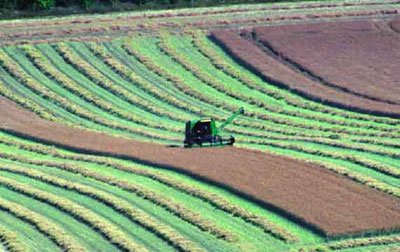 An article in Reuters entitled "Prince defies critics to make new plea for organic farming" speaks of Charles's affection for organic farming.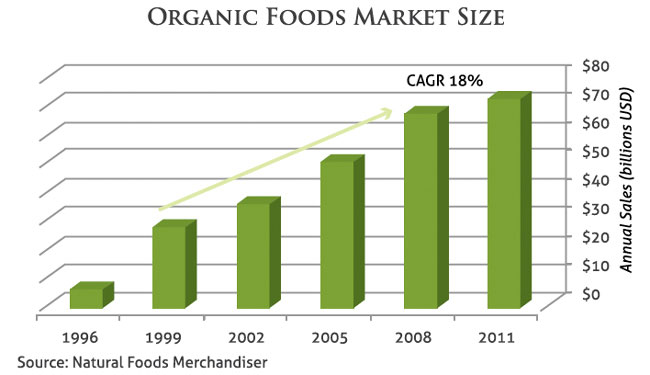
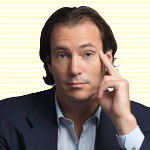 Anthony Wile is an active investor, business strategist and consultant, financial markets commentator, publisher and author. Having lived and worked in several leading financial centers around the world, Wile has established an international network of asset managers, banks, family offices, financial analysts, institutional investors and securities firms. Wile is Chairman and CEO of Toronto-based High Alert Capital Partners Inc., which provides direct financing and strategic consulting services to early-stage, privately-held growth companies.