Send this article to a friend:
October
16
2014

|
Send this article to a friend: October |
|
So About That Fusion Deal...
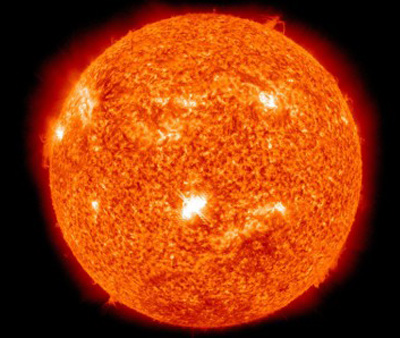
Color me skeptical, but very interested. Fusion is what powers the sun, of course. It also brings the promise of (relatively) clean nuclear energy, since the reaction products are not dangerous. There remains radiation (and lots of it!) emitted during operation, and activation of materials in the reactor still occurs, but the production of radioactive isotopes as a consequence of the consumption of the fuel does not occur. For this reason it is a dramatically superior nuclear process, but for one problem: it's damn hard to make happen, and thus obtaining more energy out, in commercially-viable amounts, than you put in has not been achieved. It has always been "10 years" away from viability. It was 50 years ago, 40, 30, 20 and now. The reason for this is that creating the conditions under which fusion takes place requires an environment of extreme heat and pressure, and that takes energy to achieve. You need to somehow not lose that energy put in to the environment or the reaction you get provides insufficient payback on your energy investment for your fusion reactor to make economic (and operational) sense. I note that despite the alleged crowing if you read carefully you will find that Lockheed-Martin is not claiming that they have achieved an energy surplus, say much less a large one. But they think they are on the path to do so.
He has been a full-time trader since 1998, author of The Market Ticker (http://market-ticker.org), a daily market commentary, and operator of TickerForum, an online trading community, both since 2007. Mr. Denninger received the 2008 Reed Irvine Accuracy In Media Award for Grassroots Journalism for his coverage of the 2008 market meltdown. In 2011 Wiley published his book "Leverage", detailing the causes of the 2008 financial collapse along with analysis and policy prescriptions for the future.
|
|---|
Send this article to a friend:
 |
 |
 |
 Mr. Denninger is the former CEO of MCSNet, a regional Chicago area networking and Internet company that operated from 1987 to 1998. MCSNet was proud to offer several "firsts" in the Internet Service space, including integral customer-specified spam filtering for all customers and the first virtual web server available to the general public. Mr. Denninger's other accomplishments include the design and construction of regional and national IP-based networks and development of electronic conferencing software reaching back to the 1980s.