The Lost Art Of Assessing Risk!
Robert Williams
 There is only one vice, which may be found in life with as strong features, and as high a colouring as needs be employed by any satyrist or comic poet; and that is AVARICE. - David Hume (1711 – 1776) There is only one vice, which may be found in life with as strong features, and as high a colouring as needs be employed by any satyrist or comic poet; and that is AVARICE. - David Hume (1711 – 1776)
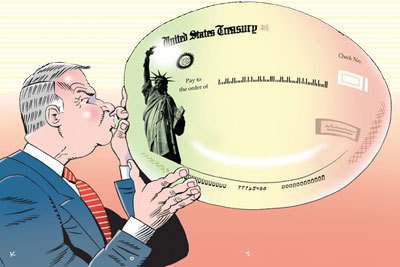
The Federal Reserve was put into operation in 1913 and is now in its one-hundredth year. Over the last century it has taken on more and more functions of the free market, some were intended and some weren’t. One of its unspoken intentions is its orchestration and supervision on the largest transfer of wealth the world has ever seen. In short it is taking the wealth of the many and giving it free of charge to a very select few. By acting the part of the benevolent father, they have duped the American public into going along with this because, “The Fed knows best!” This is precisely why our founding fathers didn’t want a central bank and did want gold and silver coin as currency.
Using the US Constitution and common sense as a guide the US transformed itself from a scattered group of colonies in 1776 into the most powerful and richest nation in the world by 1913. With the Fed at the helm for the last one hundred years the US has made the shift from the largest creditor nation to the largest debtor nation the world has ever known. Thanks to the Fed every man, woman and child in America owes $53,539 and that doesn’t even begin to scratch the surface. If I add in unfunded obligations like social security, Medicare and federal pensions the amount owed would increase fivefold if not more.
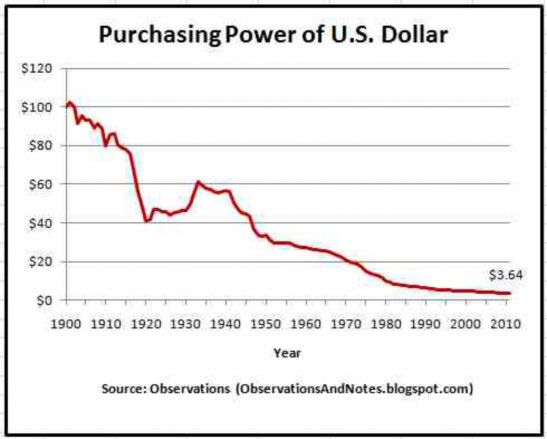 Perhaps the Fed’s greatest misdeed is the almost complete destruction of the average American’s ability to buy things. Now I’ll tell you that as bad as the previous chart looks, it’s about to get a lot worse. Perhaps the Fed’s greatest misdeed is the almost complete destruction of the average American’s ability to buy things. Now I’ll tell you that as bad as the previous chart looks, it’s about to get a lot worse.
As a final nail in the US economic coffin the Fed had to eliminate the free market’s ability to assess risk and set interest rates. It did so by creating a Roman circus atmosphere around the FOMC meeting and subsequent declarations regarding Fed funds rates.
Over time and with the help of the media the Fed convinced the poorly educated American populace that it set rates and not themarket as proponents of Adam Smith might have thought. This allowed the bull market in bonds to run further and higher than anyone would have thought possible, albeit with a dash of QE here and there.
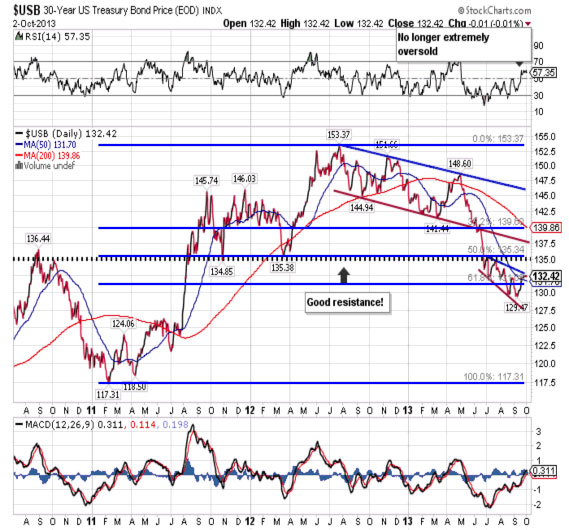 That bull market came to an end last year and bond prices have turned down forcing interest rates higher even as the Fed maintains the status quo. Here’s a good look at the decline from the bull market high: That bull market came to an end last year and bond prices have turned down forcing interest rates higher even as the Fed maintains the status quo. Here’s a good look at the decline from the bull market high:
You can see that from peak to valley it retraced 65% of the last leg up and is now distributing around the 61.8% retracement level. It is very interesting to note than when bond prices were at 135.50 and falling, RSI was extremely oversold at 19. Now after moving sideways around 132.50 the RSI has managed to crawl back up to 57. That is very unusual behavior and should be taken as a stern warning that serious trouble lies ahead.
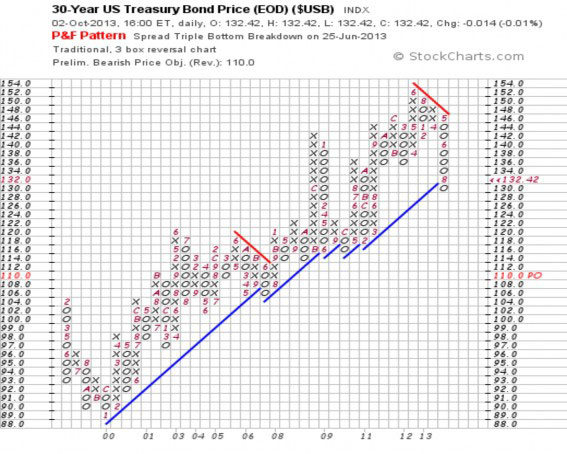
On Wednesday the President had all the CEO’s of the largest banks in the US over to the White House, and these CEO’s reportedly told the President to stop playing with fire because the financial reality is not what’s painted in the media. Now look at this Point & Figure chart for the 30 year Treasury and you’ll see that it is saying the same thing. The bearish price target of 110.00 would imply a yield of close to 6%, and that’s just for starters. Imagine how much that will add on to the cost of servicing US $17 trillion in debt?
 As bad as all that sounds the real problem with respect to the shut down and debt ceiling debate has to do with the Chinese. They hold close to two trillion dollars in US debt and if they even get a whiff of a default they’ll march right up to the window and sell it all. Of course there will be a shot across the bow first as that liquidate say 10% in a day or two as a coming attraction. That could take place as early as next week if some sort of solution is not found. As bad as all that sounds the real problem with respect to the shut down and debt ceiling debate has to do with the Chinese. They hold close to two trillion dollars in US debt and if they even get a whiff of a default they’ll march right up to the window and sell it all. Of course there will be a shot across the bow first as that liquidate say 10% in a day or two as a coming attraction. That could take place as early as next week if some sort of solution is not found.
Even if they do something it will more than likely be some sort of short term funding and no real solutions will be proposed. Over the long run bonds have no place to go but down. The only question now is how fast do we make the trip down. Keep an eye on the bond market for an answer, but don’t blink because you might miss it.
St. Andrews Investments, LLC Las Vegas, Nevada, USA info@standrewspublications.com
www.standrewspublications.com |