Send this article to a friend:
September
08
2014

|
Send this article to a friend: September |
|
Will Propane-Making Bacteria Revolutionize Energy?
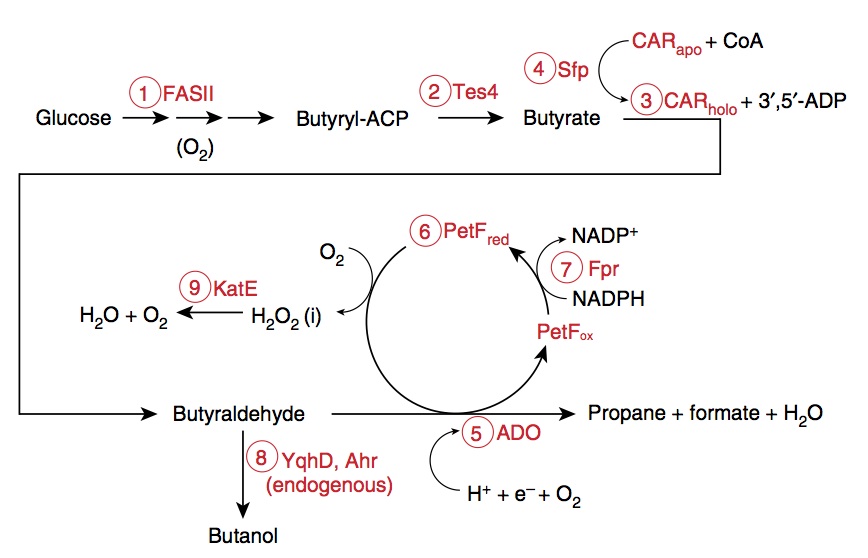
Currently, propane is extracted from natural gas or crude oil. But, in the long run, this is neither a sustainable nor an environmentally friendly practice. Burning propane extracted from the earth is also not carbon-neutral, though it is better than combusting oil or coal. Thus, researchers are looking for ways to produce renewable "fossil fuels" through the use of alternative technologies, such as synthetic biology. Last year, for instance, scientists engineered E. coli to churn out a biofuel that resembled gasoline. A team of researchers led by Patrik Jones of the University of Turku in Finland, however, believes they have invented a better method. Instead of gasoline, they focused on propane. Why? Because propane has the distinct advantage of being easily converted from gas to liquid (and back). Thus, as the bacteria release gaseous propane, the authors argue it should be easy to capture and store it as a liquid. Additionally, because propane does not build up in the culture medium, it will not inhibit the growth of the bacteria. To create their tiny fuel manufacturers, the authors had to design a propane biosynthetic pathway that does not exist in E. coli. To do so, they borrowed genes from multiple bacteria: Bacteroides fragilis, Mycobacterium marinum, Bacillus subtilis, and Prochlorococcus marinus. (The pathway they created is shown below. Black letters denote chemical compounds, while red letters denote enzymes and proteins.)
The pathway shows that their genetically engineered E. coli can be fed glucose (sugar) and crank out propane. The next step is scaling up for large-scale industrial production. Their current platform is inadequte for that, but some preliminary data suggests reason for optimism. They would also like to transfer the pathway into a photosynthetic microbe, which would essentially convert the energy of sunlight into propane. There are three big lessons from this research:
Source: Pauli Kallio, Andras Pasztor, Kati Thiel, M. Kalim Akhtar, & Patrik R. Jones. "An engineered pathway for the biosynthesis of renewable propane." Nature Communications. Published 2-Sep-2014. DOI: 10.1038/ncomms5731 |
|---|
Send this article to a friend:
 |
 |
 |
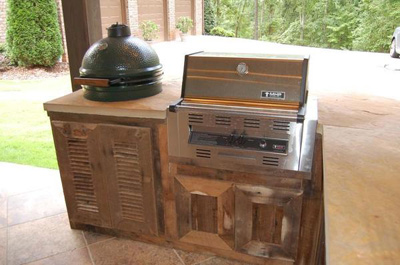 Propane is the fossil fuel of red-blooded Americans. What poolside or tailgating experience would be complete without firing up the gas grill and torching some meat? (I know, I know... there are