|
|
Ask your wallet if solar energy is the way
For instance you can find a system at DH Solar of Prairie Du Chien, Wisconsin that uses the same technology to track the sun that its parent company, DH Satellite, uses for their commercial satellite tracking system. That means you will get a better extraction of energy than you would get from a fixed-base system. Their claim that a 3-KWh (kilowatt hour) system can generate all the electric requirements of a 3,200 sq. ft. home in Wisconsin if they use efficient lighting, instantaneous water heating, and "basic" conservation measures. The cost for that setup is $28,980 with installation. If you want to save a few bucks and just buy it in the box it will knock you down to $26,705. The smallest set-up they offer is 2.10 KWh and that will set you back $24,505. You can see their solar panel systems at: www.dhsolar.net/index.htm. Incentives from power companies and organization, federal tax breaks are something else one could look into for offset that cost. Wisconsin has a program called Focus On Energy: www.focusonenergy.com, which was established after the 2005 Wisconsin act 141: energy efficiency, renewable resources, and energy policy. Basically it requires all investor-owned gas and power companies to cooperatively fund statewide renewable and efficient energy programs. The utility companies formed the Statewide Energy Efficiency and Renewable Administration or "SEERA" in which they will give individuals, industries, and organizations financial help in installing energy efficient systems. According to DH Solar their 3.0 KWh panel will get a check from Focus On Energy for $7,248. There are pre-installation stipulations that must be complied before you are eligible to receive that money so go to the Focus On Energy website before running out and buying a solar panel. I will also mention that FOE has other programs available than for just solar panels so if you have other interests in renewable or saving energy, such as the Wisconsin Energy Star Homes Program, it is worth a look. The federal government will also provide a tax credit. Again I will refer to the 3.0 KWh panel from DH Solar, since it was already done for me, the federal government will give you a tax credit of $6,520. If you didn't do the math that makes your brand new professionally installed photovoltaic solar panel go down to $15,215. With the average electric bill in Wisconsin being $92.00 a month that will mean your solar panel will pay for itself in almost 14 years on the current inflation. A Utility buy-back program is another attractive idea to those who are looking to go solar. The incentives are variable by region. Alliant Energy, which provides power to a large portion of the state of Wisconsin, has a program called Second Nature and you can find that at: www.alliantenergy.com. I have heard varying degrees on when or if to replace solar panels. I have heard they retain 90% of their efficiency even after twenty years of use and I have heard they drop significantly less. Personally I would not worry about what is going to happen twenty years down the road since the technology by then will have either far exceeded what you will need to replace or be non-existent. Even today there are breakthroughs in less expensive processes or more efficient means than the traditional silicon cell solar panels, but to my knowledge they have not hit the market in force as of yet. With the increased demand in renewable energy the cost of the current technology in the not too distant future will be driven down as more companies are formed and consumer demands for lower costs prevails. |
 |
 |

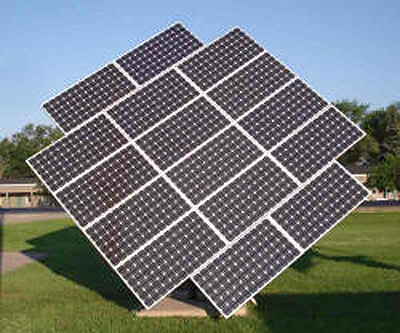 Anyone who has considered going photovoltaic (solar panels for creating electricity) usually hit the web first then, after about twenty minutes, usually backs away from it after they realize the initial cost.