|
|
Man without a plan
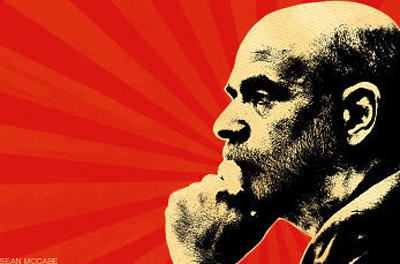
As Federal Reserve chairman, Ben Bernanke (pictured right) has committed serious sins of commission and omission - and for those many sins, he does not deserve reappointment. Let me begin with the former. It is standard practice for a central bank like the Federal Reserve to ease monetary policy to combat a recession, and then to tighten it as recovery gets under way. Mr. Bernanke so far has only had to do the first half, and has conducted a policy of extreme ease. The Fed's Open Market Committee cut the federal funds rate in October to 1 percent from 1.5 percent, and then in December to a range of zero percent to 0.25 percent. What drove down the funds rate was the Federal Reserve's decision to increase its depository bank reserves. Bank reserves have been rising since Sept. 17, as the Fed purchased securities and financed loans. When the Fed committee cut the rate to zero, it was merely ratifying the de facto rate. - NY Times Dominant Social Theme: Ben catches flak. Free-Market Analysis: The editorial, excerpted above, appeared in the New York Times and was written by an elderly Anna Schwartz. "Anna Jacobson Schwartz is an economist at the National Bureau of Economic Research and the author, with Milton Friedman, of A Monetary History of the United States, 1867 to 1960," according to the article. Additionally, Anna Schwartz is economist Milton Friedman's wife, and certainly a legendary economist in her own right. Friedman's great book came to the conclusion that the Federal Reserve was the proximate cause of the Great Depression because it kept rates too low for too long and then raised them suddenly in 1929, causing the Great Crash. Of course in hindsight, we know that the Federal Reserve was a good deal more complicit probably in the Roaring 20s than even Friedman suggests. First, the Federal Reserve apparently had a pact with Britain to devalue the dollar in order to bring the pound back to prewar prominence. Second, the Fed may have broken the law by printing more money than it was allowed to print given there was a link between the dollar and gold reserves at the time. It is said that this overprinting of money was actually what caused President Roosevelt to declare bank holidays. He didn't want the public to find out how much money the Fed had printed and he likely ended up confiscating gold to hide the over-printing. Conclusion: Milton Friedman is often held up as a great free-market economist. But his ultimate conclusion was only that the Federal Reserve could do better were it "steady state" - printing a fixed amount of money in order to keep rates stable. Of course, this still begs the question as to what amount of money constitutes a steady state. Ultimately, Friedman and Anna, too, seem to believe that a properly handled central bank will provide for increasing wealth for all citizens. But this means that individuals are setting market prices - not the free market, an odd lapse. In her New York Times opinion piece, Anna Schwartz seems to echo this statement, understandably. She doesn't think that Ben Bernanke kept a very steady hand on the central banking tiller. But one needs to ask the question, who would? Hint: the Invisible Hand? |
 |
 |

 (Editor's Note: Benjamin Shalom Bernanke is a lightweight academic who doesn't have a clue. He brings to mind, another quasi academic, the equally clueless Woodrow Wilson who allowed the abomination that is the Federal Reserve to occur in the first place. The problem with Bernanke is, however, that he doesn't know that he doesn't know, which provides us with a clueless egotist. Ironically, he is unwittingly destroying the economy which, might be, the goal of his Fabian masters... - JSB)