
Send this article to a friend:
May
03
2014

|
Send this article to a friend: May |
|
What the Fed Is Really Doing to Your Money 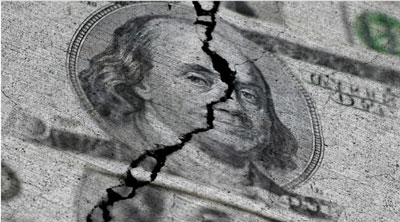
QE is a tax. That's an odd thing to say about the Fed's bond-buying stimulus program, known as quantitative easing, or QE. But the reality of QE is different than what most people think… To talk about this, I sought out Warren Mosler, a former hedge fund manager and now trailblazing economist. (I first introduced Mosler to you in your February letter, No. 120. See "How Fiat Money Works.") So on one Sunday afternoon, with Mosler in Italy and me in Gaithersburg, Md., we chatted on Skype about the Fed and its doings. Mosler was also a successful banker, and he talks about this stuff with the ease that comes from deep familiarity with the plumbing of the system. The U.S. system, importantly, is one of floating exchange rates and a nonconvertible currency. Meaning the government does not fix the price of the dollar against anything (contra what is done in Hong Kong, where they peg their currency to the dollar). And it is not convertible into anything except itself. (You can't present your dollars to the Fed and demand gold, for instance.) With those parameters, we started with a simple question: What would the natural rate of interest be if the government didn't try to interfere in the interest rate market? ("Natural rate" in this context means the risk-free, nominal rate of interest.)
Well, before we can answer that, think about the ways the government interferes in the interest rate market. There are two ways, Mosler points out. The first is that the government pays interest on bank reserves, which are essentially checking accounts held at the Fed. Currently, that rate is 25 basis points, or 0.25%. The second is to offer "alternative accounts at the Fed called Treasury securities." These are essentially savings accounts and pay higher interest than the checking accounts (or reserve accounts). "If we eliminated these things, there would no interest paid on reserves, and there would be no securities," Mosler says. "So the natural rate of interest would be zero." Like in Japan for 20 years. Note this doesn't mean there would be no interest rates. It means absent these interventions, the market would determine interest rates based on credit risk, etc. But there would be no floor — no risk-free rate, no natural rate — put in place by the government. "Not that you should do it that way," Mosler says, "but that's the way to look at it. The base case is zero. Then the Treasury comes in and offers $17 trillion in securities. And that's a distortion, to some degree. If the Fed did QE and bought them all back, it would put you back to where you started. In some sense, QE is undoing what the Treasury has done." When the Fed buys securities, it is as if the Treasury never issued them in the first place. Or as Mosler puts it in a tidy, eight-page paper (more on that in a bit):
In other words, the government doesn't have to pay 3% on a 10-year note, as it does today. It doesn't have to issue bonds at all. It creates dollar deposits (money) in member bank reserve accounts when it spends. By issuing securities/offering alternative interest-bearing accounts, the government pays a lot of interest to the economy. "So in that sense," Mosler says, "issuing securities means paying higher rates than the overnight rate. It is a spending increase and has an inflationary bias by adding net financial assets to the system." The mainstream view says that when the government sells Treasury securities, it is taking money out of the system, that it's a deflationary thing to do and it offsets the inflationary effect of deficit spending. "Not true at all," Mosler says. "Selling Treasuries does not take money out." What's happening is akin to a shuffle between checking accounts and savings accounts.
Chris Mayer is managing editor of the Capital and Crisis and Mayer's Special Situations newsletters. Graduating magna cum laude with a degree in finance and an MBA from the University of Maryland, he began his business career as a corporate banker. Mayer left the banking industry after ten years and signed on with Agora Financial. His book, Invest Like a Dealmaker, Secrets of a Former Banking Insider
documents his ability to analyze macro issues and micro investment opportunities to produce an exceptional long-term track record of winning ideas. In April 2012, Chris released his newest book World Right Side Up: Investing Across Six Continents.
|
|---|
Send this article to a friend:
 |
 |
 |