Unplugging Americans From The Matrix
Paul Craig Roberts
 |
Americans, the British, and Western Europeans are accustomed to thinking of themselves as the representatives of freedom, democracy, and morality in the world. The West passes judgment on the rest of the world as if the West is God and the rest of the world are barbarians in need of chastisement, invasion, and occupation. As readers know, from time to time I raise questions about the validity of the West’s extreme hubris. (See for example, the following articles: Washington’s Insouciance Has No Rival and Is Western Democracy Real or a Facade? )
China is often a country about which Washington’s moralists get on their high horse. However, China’s “authoritarian” government is actually more responsive to its people than America’s “elected democratic” government. Moreover, however incomplete on paper the civil liberties of China’s people, the Chinese government has not declared that it can violate with impunity whatever rights Chinese citizens have. And it is not China that is running torture prisons all over the globe.
For some time I have had in mind a realistic comparison of the two countries instead of the standard propagandistic comparison, but Ron Unz has beat me to the task (see, China’s Rise, America’s Fall and Chinese Melamine and American Vioxx: A Comparison ). Unz provides a chance for an education. Don’t miss it.
Unz has done an excellent job. Moreover, he cleverly understates the case for China and overstates the case for America so as not to unduly arouse the flag-wavers. Nevertheless, the conclusion is clear: The Chinese are less threatened by their “extractive elites” than Americans are by their counterparts.
Moreover, it is America’s, not China’s, extractive elites who are bombing, occupying, and droning other countries. As the bumper sticker says, “Be nice to America or we will bring democracy to your country.”
As for economic management, there is no comparison. Unz reports that during the past three decades China has achieved the most rapid rate of economic development in human history. Moreover, most of the new income has flowed into the pockets of Chinese workers, not to the one percent. While American real median incomes have been stagnant for decades, incomes for Chinese workers have doubled every decade for three decades. A recent World Bank report attributes more than 100 percent of the drop in global poverty rates to China’s rise.
In the last decade China’s industrial output quadrupled. China now produces more automobiles than America and Japan combined and accounted for 85 percent of the increase in the world’s production of cars in the past decade.
In 1978 the American economy was 15 times larger than China’s. In the next few years China’s GDP is expected to exceed that of the US.
This is heady stuff providing astonishing details of how poorly Americans are served by their elites.
America has failed, because political elites represent only the powerful special interests that write the country’s laws in exchange for funding the political campaigns of “lawmakers.” To divert attention from their failures, American elites point fingers at external scapegoats. China, for example, is accused of manipulating its currency. As Unz says, the scapegoating is political theater designed for the ignorant and gullible.
America’s economists, or most of them, have so prostituted themselves that propaganda has become wisdom. Most Americans believe that if China would simply let the value of its currency rise more rapidly relative to the dollar, America’s economic woes would be at an end. It is beyond belief that any economist could think that Americans with stagnant and declining incomes would be made better off by a sharp rise in the prices of goods manufactured in China on which Americans are dependent, or that the US dollar’s role as reserve currency, the main source of American power, could survive such a manifestation of Chinese economic superiority.
Americans associate lawlessness with unaccountable governments and view China’s government as unaccountable. However, Unz points out that it is the Bush/Obama Regime that has declared itself to be unaccountable to both US and international law.
The demise of the War Powers Act and the Geneva Conventions, and the asserted power of the executive to imprison without trial or charges or to assassinate any American whom the executive thinks might be a “national-security threat” are indicative of a total police state masquerading as an accountable democracy. In America six-year old little girls who misbehave in school are handcuffed, jailed, and charged with felonies. (see, 10 Disgusting Examples of Very Young School Children Being Arrested, Handcuffed and Brutalized By Police ) Not even Hitler and Stalin went this far.
Americans have lost control of the government, and governments that are not controlled by the people are not democracies. In America today, Social Security, Medicare, food stamps, and the entire social safety net are threatened by the vociferous desire for war profits by armament plutocrats and by financial institutions determined that ordinary citizens bear the cost of the banksters incompetence and fraud.
Unz’s comparison of how the Chinese media and government handled the melamine or infant formula scandal and how the American media and government handled Merck’s Vioxx scandal is especially damning. It was China’s controlled media and unaccountable government that punished the infant formula wrongdoers, while America’s free press and accountable government allowed Merck to walk.
Unz’s conclusion is that it is in America, not China, where life is regarded as cheap.
Ron Unz is an American hero, and a very courageous one. As George Orwell said, “In a time of universal deceit, telling the truth is a revolutionary act.”
It is an even more courageous act when no one wants to hear the truth. As Frantz Fanon said, "Sometimes people hold a core belief that is very strong. When they are presented with evidence that works against that belief, the new evidence cannot be accepted. It would create a feeling that is extremely uncomfortable, called cognitive dissonance. And because it is so important to protect the core belief, they will rationalize, ignore and even deny anything that doesn't fit in with the core belief."
Or as it is explained to Neo in the film, "The Matrix is a system, Neo. That system is our enemy. But when you're inside, you look around, what do you see? Businessmen, teachers, lawyers, carpenters. The very minds of the people we are trying to save. But until we do, these people are still a part of that system, and that makes them our enemy. You have to understand, most of these people are not ready to be unplugged. And many of them are so inured, so hopelessly dependent on the system, that they will fight to protect it."
Most of the people I know personally are not willing to be unplugged. I assume my readers are, so seize the opportunity to be further unplugged and read Ron Unz’s comparison of America and China.
Then do what you can to unplug others.
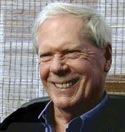 Hon. Paul Craig Roberts is the John M. Olin Fellow at the Institute for Political Economy, Senior Research Fellow at the Hoover Institution, Stanford University, and Research Fellow at the Independent Institute. A former editor and columnist for The Wall Street Journal and columnist for Business Week and the Scripps Howard News Service, he is a nationally syndicated columnist for Creators Syndicate in Los Angeles and a columnist for Investor's Business Daily. In 1992 he received the Warren Brookes Award for Excellence in Journalism. In 1993 the Forbes Media Guide ranked him as one of the top seven journalists. Hon. Paul Craig Roberts is the John M. Olin Fellow at the Institute for Political Economy, Senior Research Fellow at the Hoover Institution, Stanford University, and Research Fellow at the Independent Institute. A former editor and columnist for The Wall Street Journal and columnist for Business Week and the Scripps Howard News Service, he is a nationally syndicated columnist for Creators Syndicate in Los Angeles and a columnist for Investor's Business Daily. In 1992 he received the Warren Brookes Award for Excellence in Journalism. In 1993 the Forbes Media Guide ranked him as one of the top seven journalists.
He was Distinguished Fellow at the Cato Institute from 1993 to 1996. From 1982 through 1993, he held the William E. Simon Chair in Political Economy at the Center for Strategic and International Studies. During 1981-82 he served as Assistant Secretary of the Treasury for Economic Policy. President Reagan and Treasury Secretary Regan credited him with a major role in the Economic Recovery Tax Act of 1981, and he was awarded the Treasury Department's Meritorious Service Award for "his outstanding contributions to the formulation of United States economic policy." From 1975 to 1978, Dr. Roberts served on the congressional staff where he drafted the Kemp-Roth bill and played a leading role in developing bipartisan support for a supply-side economic policy.
In 1987 the French government recognized him as "the artisan of a renewal in economic science and policy after half a century of state interventionism" and inducted him into the Legion of Honor.
Dr. Roberts' latest books are The Tyranny of Good Intentions, co-authored with IPE Fellow Lawrence Stratton, and published by Prima Publishing in May 2000, and Chile: Two Visions - The Allende-Pinochet Era, co-authored with IPE Fellow Karen Araujo, and published in Spanish by Universidad Nacional Andres Bello in Santiago, Chile, in November 2000. The Capitalist Revolution in Latin America, co-authored with IPE Fellow Karen LaFollette Araujo, was published by Oxford University Press in 1997. A Spanish language edition was published by Oxford in 1999. The New Colorline: How Quotas and Privilege Destroy Democracy, co-authored with Lawrence Stratton, was published by Regnery in 1995. A paperback edition was published in 1997. Meltdown: Inside the Soviet Economy, co-authored with Karen LaFollette, was published by the Cato Institute in 1990. Harvard University Press published his book, The Supply-Side Revolution, in 1984. Widely reviewed and favorably received, the book was praised by Forbes as "a timely masterpiece that will have real impact on economic thinking in the years ahead." Dr. Roberts is the author of Alienation and the Soviet Economy, published in 1971 and republished in 1990. He is the author of Marx's Theory of Exchange, Alienation and Crisis, published in 1973 and republished in 1983. A Spanish language edition was published in 1974.
Dr. Roberts has held numerous academic appointments. He has contributed chapters to numerous books and has published many articles in journals of scholarship, including the Journal of Political Economy, Oxford Economic Papers, Journal of Law and Economics, Studies in Banking and Finance, Journal of Monetary Economics, Public Finance Quarterly, Public Choice, Classica et Mediaevalia, Ethics, Slavic Review, Soviet Studies, Rivista de Political Economica, and Zeitschrift fur Wirtschafspolitik. He has entries in the McGraw-Hill Encyclopedia of Economics and the New Palgrave Dictionary of Money and Finance. He has contributed to Commentary, The Public Interest, The National Interest, Harper's, the New York Times, The Washington Post, The Los Angeles Times, Fortune, London Times, The Financial Times, TLS, The Spectator, Il Sole 24 Ore, Le Figaro, Liberation, and the Nihon Keizai Shimbun. He has testified before committees of Congress on 30 occasions.
Dr. Roberts was educated at the Georgia Institute of Technology (B.S.), the University of Virginia (Ph.D.), the University of California at Berkeley and Oxford University where he was a member of Merton College.
He is listed in Who's Who in America, Who's Who in the World, The Dictionary of International Biography, Outstanding People of the Twentieth Century, and 1000 Leaders of World Influence. His latest book, HOW THE ECONOMY WAS LOST, has just been published by CounterPunch/AK Press. He can be reached at: PaulCraigRoberts@yahoo.com
www.paulcraigroberts.org |