|
|
Did the Oil Price Boom of 2008 Cause Crisis?
In a paper presented at the Brookings Panel on Economic Activity Thursday, University of Calif.-San Diego economist James Hamilton crunched some numbers on how consumer spending responds to rising energy prices and came to a surprising result: Nearly all of last year's economic downturn could be attributed to the oil price shock.
But then again, maybe what happened to oil prices had something to do with credit markets seizing up. The housing bubble saw people of lesser means traveling further afield to buy homes. That gave them long commutes that they were able to afford when gas was $2 a gallon, but maybe they couldn't at $3. Housing in the exurbs got hit hardest, and one reason why is that high gasoline prices made it hard for people to lived in them to keep up with their mortgage payments, and hard for them to sell their homes without taking a steep loss. In some meaningful way, that has to have contributed to mortgage problems. A more controversial argument on energy's role in the credit crunch could go like this. Housing prices kept on climbing, but the Federal Reserve – laboring on the idea that it couldn't identify bubbles and that even if it could, it shouldn't pop them - didn't do anything about them. But then rising oil prices started adding to inflationary pressures, so the Fed kept pushing rates higher, left them high even as housing prices collapsed, and was to slow to lower them when the credit crisis got rolling. |
 |
 |

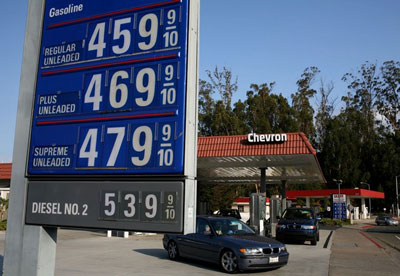 Reeling from the housing bust and the banking crisis, it's hard to think that the energy shock - the one that carried the average price of gasoline to a peak of $4.11 a gallon last July - was much more than a minor player in the economic downturn. But there's the uncomfortable fact previous oil shocks, like the ones that came with the 1973 oil embargo, the 1979 Iranian revolution and the 1990 invasion of Kuwait, were also associated with recessions. And the 2001 recession, too, came on the heels of a run-up in oil prices.
 As he
As he