|
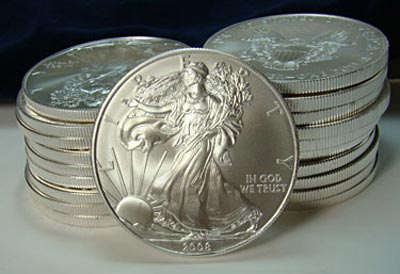
Robert Shapiro recalls holding discussions nine years ago with Mexican leaders, including a senator and a member of the nation’s central bank, on the merits of using silver as a currency instead of pesos. “I found out that Mexico’s economy was the right size, and at the time they were the number one silver producers in the world, and [I] thought that they would set the silver standard,’’ Shapiro said. “I tried to convince them that it would be a great advantage.’’ But Shapiro was not in Mexico representing the United States. In fact, as a math teacher in Methuen at the time, he wasn’t representing anyone officially. “I went on my own,’’ said the Andover resident, on what he called his two-month stint as a consultant economist. “I sent them a letter with this outlandish proposal and one senator sent me a reply… . I like to think outside the box.’’ Shapiro’s idea may not have taken hold in Mexico, but he hopes it does in Andover, where he will ask Town Meeting voters in April to authorize the town to give its employees and contractors the option of receiving part of their pay in $1 American Eagle Silver coins. “It’s a roughly 4 to 5 percent boost in purchasing dollars,’’ Shapiro said. “The town of Andover stands to save about $1 million if roughly 250 employees participate.’’ In his petition, which received the minimum 10 signatures from registered voters to make it onto the Town Meeting warrant, Shapiro states that as of last month, the exchange rate for a $1 silver coin is $35. Employees who choose to receive part of their earnings in silver coins would realize savings by way of paying less taxes, he said. An employee making $1,000 a week, for instance, may choose to receive half of those wages in silver coins: The town would pay $500 in paper dollars and $500 based on the exchange rate of the silver coins, Shapiro said. Based on the January exchange rate, $500 would be the equivalent of roughly 14 silver coins. So the employee would receive $514 ($500 for their approximate value when sold and $14 for their face value) in wages, instead of $1,000, thereby falling to a lower tax bracket and paying less in taxes, Shapiro said. The tax savings also would apply to the town, as it would only have to withhold taxes on the face value - not the higher market value - of the coins, he said. “There is another side, and the other side is that the 4 to 5 percent [in purchasing power] that the employee and the town would save is coming from Uncle Sam,’’ Shapiro said. “And so the IRS is going to take the fall for it, and they’re not going to be happy.’’ |
 |
 |