|
|
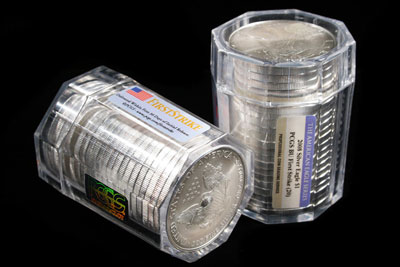
Silver outshines gold for investors But silver has comfortably outperformed gold, with prices rising 29.2 per cent this year to a high of $14.60 a troy ounce on Monday, while gold's peak at $1,005.40 was a gain of 14.5 per cent. This is in spite of the fact that the fundamentals of the silver market point to lower prices, rather than higher ones. "Silver's price rise this year is not being driven by fundamentals, which are weakening," says Suki Cooper of Barclays Capital. As with gold, investor buying interest has been the key to the rally. "Silver is being driven purely by the strength of investment buying," says Ms Cooper, who notes that inflows into silver exchange-traded funds this year have reached 1,676 tonnes (taking the total to 9,929 tonnes), considerably more than the 322 tonnes that have flowed into all the gold ETFs over the same period. In 2008, holdings in silver ETFs increased 2,339 tonnes to 8,253 tonnes, so the pace of inflows this year has stepped up considerably. Investor interest in silver coins has also risen. Sales of silver American Eagle coins have reached just over 4m ounces so far in 2009, almost double the rate of last year, when sales reached 19.6m ounces for the full year. Can prices keep going higher? Hedge funds have been extending their bets on silver prices climbing, with the speculative net long position rising 1,710 lots to 23,100 lots in the week ending February 17, according to the Commodity Futures Trading Commission. However, hedge fund influence has shrunk compared with positioning at the price peak last year, when the net long position stood at about 50,000 lots. Investors in ETFs now have more influence in the market and the balance of power is changing between these long-term position holders and hedge funds. Speculators now account for 28 per cent of the total net long position (hedge funds and ETFs combined), whereas, at the market's peak last year, they controlled about 50 per cent. When it comes to fundamentals, the picture is not so encouraging for silver. Barclays is forecasting a drop of 4.7 per cent in industrial demand this year, a decline of 4.2 per cent in photographic demand and a small fall of 0.4 per cent in jewellery demand. At the same time, the bank expects an increase of 3.5 per cent in silver mine supply to 22,997 tonnes in 2009 and the overall supply surplus to increase from 1,014 tonnes in 2008 to 2,513 tonnes this year. "Despite the strength in physical investment, we still expect the market surplus to grow in 2009," says Ms Cooper. "Should speculative enthusiasm ease, prices could encounter growing downside risk." Barclays is forecasting that silver prices will average $11.80 an ounce this year. It is not the only investment house to predict that prices will fall from current levels. Natixis forecasts that silver prices will average $12.50 in 2009, down 17 per cent year-on-year. Hussein Allidina, commodity strategist at Morgan Stanley, forecasts an average price of $11 an ounce. "Silver prices have largely been driven by gold and copper prices over the past decade but in 2009 they should more reflect the weakness in copper, given the fall in industrial demand, than the strength in gold," he says. Morgan Stanley expects investment demand to remain resilient in 2009. But Mr Allidina warns that silver prices are likely to stay more volatile than gold due to lower inventory levels and growth in supplies from scrap. February 24 2009 |
 |
 |

 So much attention has been focused on gold prices recently that the performance of the silver market has been somewhat overlooked.