
January
26
2013
26
2013
|
January 26 2013 |
What Can the Gun-Control Debate Teach Us 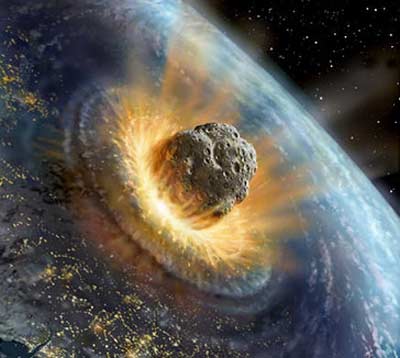
After the tragic events at Sandy Hook Elementary, I said to a friend of mine, "People have to stay armed in case the government ever becomes overly tyrannical." My friend gave an annoyed response that I've heard a million times: "Well, that's not going to happen. The government isn't going to become tyrannical." To a certain extent, he's right. I seriously doubt that you'll ever need to use your firearm to fight your own government. Let's hope that you don't. It's a very low-probability event. But then again, ironically, so was the shooting at Sandy Hook. If someone had told me a few months ago that a person was going to kill twenty kids in an elementary school, I would have said, "No way! There's no chance of something like that ever happening. In fact, you're even a bit of a weirdo for having considered something of the sort. Go see a shrink!" Unfortunately, I would have been extremely wrong. Despite the intro of this article, my point here isn't about gun control, but instead low-probability events. When should we worry about them, why, and how we can protect ourselves from them? I've heard my friend's response many times on all kinds of political issues unrelated to gun control. Hyperinflation? "That's not going to happen." The US could become a socialist nation. "That's not going to happen." It's always the same response. Not only can these sorts of things happen – they do happen, and sometimes more frequently than one may realize. When my grandpa was a teenager during WWII living in Croatia, he was watching the cows in the pasture one day; the next day, the local Croatian Nazis came through, murdered his grandmother, and burned down the family house. (On a side note, people's guns had been confiscated first.) During WWII in Croatia, there was even a children's concentration camp. If you think Sandy Hook was a tragic event, just think of the scale of a children's concentration camp. Besides suffering the tragedies of war, my grandfather would also live under hyperinflation and communism in his lifetime, along with yet another war. So, all of those things which are supposedly "never going to happen" have happened to my family – sometimes more than once. The common response to my grandpa's story is, "Well sure, but you're from the Balkans. People over there are crazy. We're not like them. That's never going to happen here." If you think that's the case, go take a stroll to your local Civil War cemetery, which commemorates a conflict where 600,000 Americans were killed. There's a typical response to this point as well: "Oh, but that was a long time ago. That couldn't happen now." Maybe it's unlikely, but it's hardly impossible. People often think that the present is some sort of evolved state of human existence. Because we've been through previous wars and hardships and there hasn't been any major misery lately, then it can't happen again. It's very foolish and sloppy thinking. Let's take this discussion a little closer to the present. How many completely unpredictable political events have already happened in your life? I can't say that I saw September 11, 2001 coming. Of course, terrorist attacks were always possible, but I could have never foreseen something of that scale. Or what about a positive event? How many people saw the Cold War ending so peacefully with the fall of the Berlin Wall? Even the fact that we have an African-American president would have been out of the political realm of possibility a few decades ago. How about getting stuck in the longest recession since the Great Depression? When I was going through school, I thought the world was my oyster. A major recession? That's not going to happen… maybe a small one at worst. Great Depressions are behind us, of course, right? Those are just Grandpa's stories, right along with his WWII experiences. It can't happen to me. Well, lo and behold, it did happen! And not only did a great recession happen, but so did a war. Plenty of my high-school friends are coming back from their second and third deployments in Iraq and Afghanistan. Low-probability political events happen, and they seriously impact your life and sometimes even end it. The question is, how do we protect ourselves from those events? I don't want to be a fearmonger here or to discuss these issues irrationality, so let's use a little math to get a clearer understanding of the best way to protect oneself. If an event could cause you a $100 loss, what is the most you should spend to insure against that event, assuming the odds of it occurring are one in a hundred? The answer is $1. If the loss were $200, it would be $2. If you took the same bet thousands of times, you would come out even. If you paid any more, you would come out a loser over thousands of similar bets. So there are two factors at play here – the probability and the potential loss. If the probability of something bad happening is greater, you should spend more money to protect yourself against it. If the potential loss is greater, we also want to spend more. As a result, it makes sense to insure ourselves against events where the potential loss is very high, even though most people would say, "That's never going to happen." To protect yourself without going overboard, you have to find a balance between probability and potential loss. Where most people make a mistake is failing to understand this balance. They either look at the probability and say "That's never going to happen," or they look at a possible apocalypse and start buying tons of surplus ammunition without considering the small chance of the event actually taking place. A good example is the gun-control debate itself. Some people want gun control because even though mass shootings are extremely rare, they do still happen. And while those "nut bags" are talking about tyranny and revolutions, I have never seen one here in my lifetime. The mistake here is looking at only the probability rather than the probability and the potential loss. Yes, obviously, another school shooting is more likely than, say, another civil war in the US. However, that doesn't mean that we shouldn't worry about internal strife. One school shooting means dozens of people killed. One war can mean hundreds of thousands killed. So, even if you have one Civil War every 300 years, the damage would be by far worse than all of the school shootings combined in the past few decades. In fact, to match the horror of 600,000 deaths in the Civil War, you would need about 67 school shootings with 30 victims in each incident every year for a period of 300 years. To see what's worse, you have to combine probability with potential loss. If owning guns can prevent a government from becoming tyrannical once in every 300 years, they will ultimately save a lot more lives than they unfortunately might take in the meantime. How can you personally prepare yourself for a low-probability event? My answer is not locking yourself into a bomb shelter with a decade of canned food, nor moving out to the middle of nowhere to live off the land. Low-probability events are just that… not probable. You don't want to spend a lot of resources on something that's probably not going to happen. Remember the $1 to prevent the $100 loss mentioned earlier. A good example of sound preparation for the unexpected is seat belt use. I wear my seat belt every time I'm in a vehicle. I don't do it because I think that I'll get in an accident, but instead because the cost of doing so is very low. It doesn't really inconvenience me, so I'm essentially protected from a low-probability event for free. However, suppose that every time that I drove a car, I had to pay $100 for the right to use my seat belt. Despite the potential dangers, I probably wouldn't use my seat belt at that price. The trick is to find a balance between prevention and the outcome. I could wear a batting helmet and a bulletproof vest on my walk to the corner store, but my cost of social awkwardness is greater than the increased safety. There's a point where that balance is lost. When trying to prepare for low-probability, negative political events, we essentially have to find safety belts. We have to find ways to protect ourselves from something horrible while keeping the costs of doing so low. Betting a lot of money on a low probability is almost always a sure way to lose. It's playing roulette with all of your chips on a single number. One reason that I like gold is that it acts as a safety belt. I don't like it because I'm positive that there's a hyperinflation around the corner or I'm certain that the US government is going to collapse tomorrow. I'm a lot less pessimistic than most of Casey Research's writers. I own gold because it protects me from certain events at a very low cost. If there's some major political turmoil or a hyperinflation, I'll be doing great with gold. But if there's not, Bernanke is still printing a lot of money, so we'll definitely get some inflation, and gold will do all right. I don't need it to double. If gold gives me solid 15% returns for a couple of years in a row, I'll be a happy guy. And suppose I'm wrong and the economy turns around and everything goes smoothly on the political side as well. I guess I'll take a small loss, but on the other hand, I'll be happy to be in a thriving economy – an end result which might make me even more money. If there's a possibility of a low-probability event, you have to find the seat belts available to you. Rearranging your whole life to prevent an unlikely event from happening is unwise – and a waste of resources if the doom and gloom event never happens. We necessarily must live with some risk and uncertainty. To take this back to the Sandy Hook tragedy, politicians across the board are missing this lesson. Instead, almost all of the plans involve paying extremely high costs to avoid low probabilities – whether it's taking everyone's guns away or putting a guard in every school. If that's the right method to deal with low-probability events, you might as well give your kids a batting helmet for their walk to school. Hey, it would probably save a life somewhere along the way, right? However, the cost might be one lonely prom night. |
 |
 |
 |