
January
17
2013
17
2013
|
January 17 2013 |
In Counterfeiting We Trust 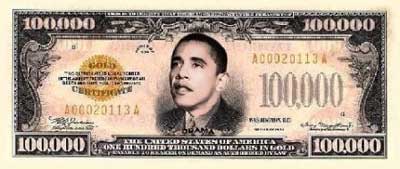
If there is one central myth supporting the folly that passes for monetary policy and by extension fiscal policy, it would have to be the unchallenged assumption that money should be defined and controlled by government. Given the role of money in the economy - that it is one-half of virtually every transaction - nothing has been more destructive to the well-being of most people than the government’s usurpation of money from the market. Counterfeiting, and the resulting inflation [of the money supply], is therefore a process by which some people—the early holders of the new money—benefit at the expense of (i.e. they expropriate) the late receivers. The first, earliest and largest net gainers are, of course, the counterfeiters themselves. . . .Kings of old could debase their coins and pass them off as the real thing but this was a slow, tedious process that didn’t yield much revenue. Not only that, people grew wise to it and found ways to tell a cheat from a genuine article. And they saw it as a cheat, not as a way of increasing GDP, or making the price of exports more competitive, or stabilizing the price level. Paper money changed all that. People deposited their gold and silver in banks for safekeeping, then used the paper claims to the metal as convenient substitutes for money. Bankers soon proved they couldn’t be trusted. They would give in to the temptation to loan out some of their deposits at interest, having observed that most people were satisfied using the paper itself in their transactions and would rarely redeem it for the gold or silver. When noteholders and depositors came running to redeem their rightful claims and the banks proved unable to comply, the government allowed the banks to turn them away empty-handed while remaining in business. Slamming the doors on legitimate note holders and depositors was embarrassing to the banks, not to mention unprofitable. Thus in the U.S. the biggest bankers pushed for and finally got a law passed in 1913 that created a central bank - the Federal Reserve. Economist Joe Salerno describes the Fed as a cartelizing device that limits entry into and regulates competition within the lucrative fractional-reserve banking industry and stands ready to bail it out, thus guaranteeing its profits and socializing its losses. p. xxiFor a few years there was a serious problem with this arrangement: gold stood in the way. Central banks could conceivably counterfeit gold but the fake coins would differ in composition from the real thing and would be subject to detection. From the counterfeiters’ perspective, the beauty of paper money is that it all looked the same. Gold was subsequently framed as one of the causes of the Great Depression and by decree paper, the money substitute, became money itself. The president the people elected seized their gold and locked it up in the Fort Knox Bullion Depository. As dollars can now be created with a few keystrokes, it has proven trivial to fund trillion dollar deficits and endless rounds of QE. Today, the rich are getting richer and the poor are getting poorer not because of “capitalism,” but because of a government-supported monetary system that enriches designated counterfeiters and their beneficiaries at the expense of other dollar holders. Ironically, Milton Friedman, never a champion of a gold coin standard, had priceless insight to how it worked: If a domestic money consists of a commodity, a pure gold standard or cowrie bead standard, the principles of monetary policy are very simple. There aren’t any. The commodity money takes care of itself. p. 366Given that monetary policy today consists of varying degrees of counterfeiting, we need to get government out of the way and let the market-designated money - whatever it may be - take care of itself.
|
 |
 |
 |